Even CNN Reporters Were Shocked. Why 'Developer Job Openings Are Growing' in the AI Era, and Cursor's Insane Growth Speed Approaching $60B
CNN reported that 'developers won't die.' Indeed job postings up 11%, IBM tripling hires, Cursor at $60B. Why developer demand is growing in the AI era, and the next form developers will take.
What you'll learn in this article
- The key point to grasp before reading the full article
- How the issue changes the way developers should work next
- Which follow-up article is worth opening next

This article can be read as a continuation of the recently published “NVIDIA’s Open AI Agent Infrastructure Built With 16 Companies.” It also stands on its own.
The Day CNN Wrote “Developers Won’t Die”
On April 8, 2026, an article appeared in CNN Business.
The headline, translated directly, reads: “The death of the software developer has been deliciously exaggerated” (CNN Business, April 8, 2026).
Honestly? My first reaction was to dismiss it as contrarian clickbait.
“In an era when AI writes code, demand for developers is growing.” No way, I thought. Since ChatGPT hit the world in late 2022, we’ve heard over and over that “coders’ jobs will disappear.” Open any social media timeline and you’ll see “programmers are obsolete” arguments flowing through weekly. I myself, when I first started using Cursor, had a moment of thinking, “Wait, humans really might not be needed anymore.”
But as I read further into the article, the numbers started lining up.
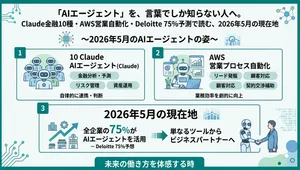
Indeed’s job posting data shows developer-related openings up 11% year-over-year. That’s faster than the average across all professions. IBM has announced it’s tripling its U.S. early-career hiring. Intuit is aggressively expanding recruitment of AI-generation young developers.
Up 11%. Triple. Seeing these numbers, the thought that hit me first was simple surprise. “It’s actually growing.”
I’ll be honest: I’d be lying if I said I wasn’t anxious before seeing this data. While writing my articles on vibe coding, I had a vague unease. “When AI gets even smarter, won’t even the humans on the side of ‘making AI write code’ become unnecessary?”
But what CNN’s article confronted me with was the exact opposite reality. There’s a structural reason here that goes beyond mere optimism. Developer jobs aren’t disappearing — their contents are being rewritten. I’ve decided to call this phenomenon “Coder Evolution Theory.”

Indeed Up 11%, IBM Tripled. The “Evolution” Behind the Numbers
Let me break down the data CNN cited a bit more carefully.
Indeed’s 11% increase represents the entire developer category. What’s worth noting is the fact that the growth rate exceeds the average across all professions. AI adoption is most advanced in this industry, yet job openings are growing faster than in others. Doesn’t that seem contradictory at first glance?
Behind IBM tripling its early-career hires lies a clear strategic shift. They’ve pivoted from an era of hiring only seasoned senior engineers to one of mass-training AI-native young talent. IBM’s view is: “Rather than 10 years of coding experience, we value the flexibility to wield AI tools.” They’ve judged that talent raised alongside AI will be more immediately effective than those unaccustomed to AI-first development styles.
Intuit is moving in the same direction. The company that develops TurboTax and QuickBooks has set a policy of aggressively hiring AI-generation young talent. You can sense the urgency on the ground: “We don’t have enough people who can wield AI.”
The CNN article also touched on Citadel Securities’ data analysis. Routine coding work has indeed shifted to AI. Meanwhile, demand for new roles “designing, managing, and optimizing fleets of AI agents” is rapidly expanding.
Let me explain concretely how daily work changes, from my own experience.
My previous business tool development flow looked like this. Define the spec. Read the API docs. Write about 100 lines of integration code. Write tests. Debug when errors appeared. I budgeted 2–3 days for the whole process.
Now it’s different. I give instructions to Claude Code. “Connect this API to this API.” “Notify Slack on errors.” In three minutes, working code comes back. What am I doing with the freed-up time? Thinking about error-handling design strategy. Building test strategies. Checking the scope of impact on users. Surveying security risks in the completed code.
The shift from “writing” to “judging.” I feel this in my daily work.
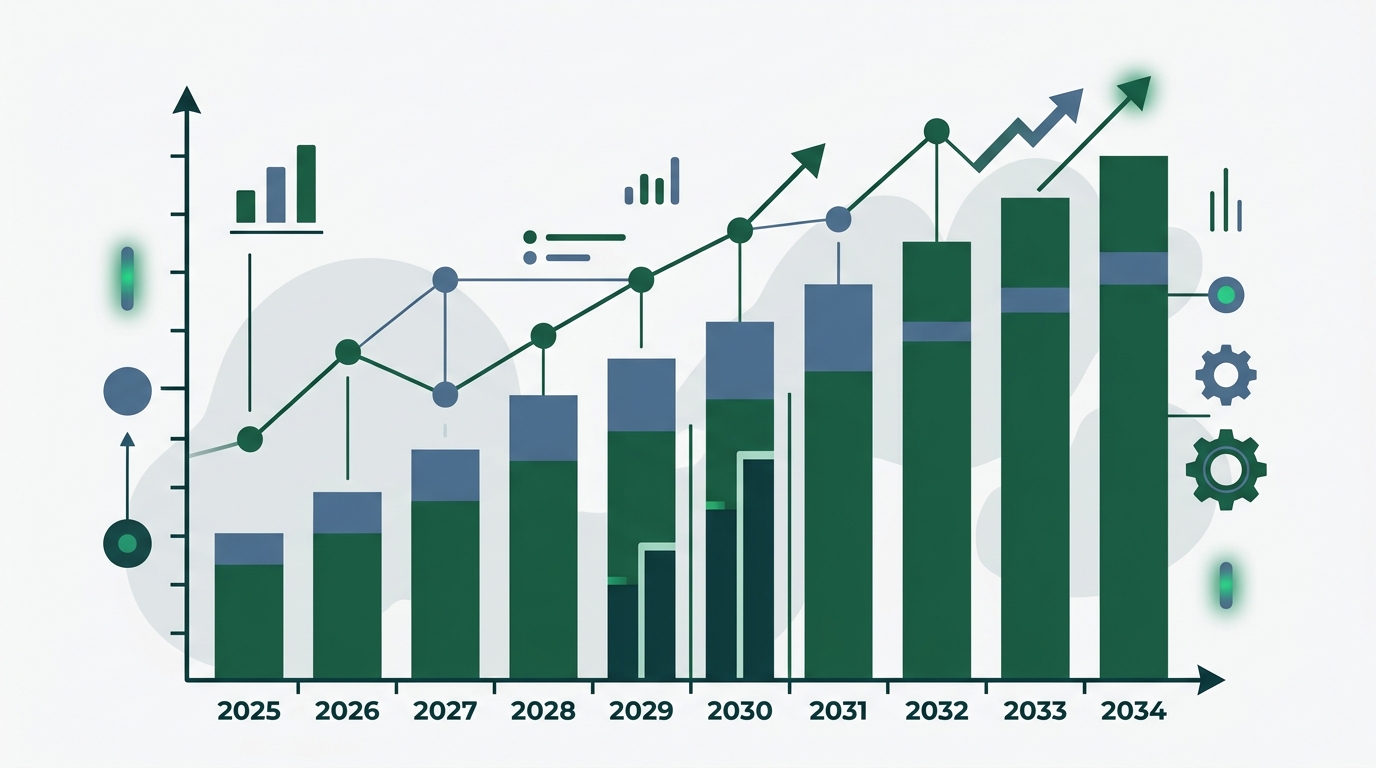
Let’s also look at the global software market. As of 2025, it’s a $824B (roughly ¥124 trillion) market. By 2034, it’s projected to reach $2,248B (roughly ¥337 trillion) (FinalRound AI). That’s a CAGR (compound annual growth rate) of 11.8% expansion.
The pie itself is growing. You could say it’s natural for job postings to grow. But it’s not that “the same jobs” are growing.
The contents of the pie are being swapped out. That’s the core of “Coder Evolution Theory.”
From Coder to AI Orchestrator. The Tectonic Shift in Required Skills
The metaphor CNN’s article used is a good one. “From coder to conductor of AI agent ensembles.”
This overlaps completely with what I wrote last week in the “Agentic Engineering” article. NVIDIA’s open infrastructure built with 16 companies is exactly that. The A2A (Agent-to-Agent) protocol too. All of it is designed on the premise that “humans conduct multiple AIs.” The on-the-ground changes CNN’s article reports and the design philosophy of the infrastructure NVIDIA is pushing point in the same direction.
So specifically, what’s required of a conductor?
Looking at job roles with surging demand in 2026, the structure becomes clear. Data engineers, cloud infrastructure engineers, security engineers (Refactor Talent). All of them are roles for “safely, at scale, continuously running” AI-generated code. Precisely because AI can now write code, demand has exploded for humans to operate that code in production environments.
If I organize the skills needed for an orchestrator, three axes emerge. Requirements articulation (verbalizing what to have AI build), quality judgment (evaluating AI’s output and deciding release readiness), and design oversight (designing how to combine multiple AI agents). These are abilities questioned on a different dimension from coding speed.
Salary ranges show the change too. The title “AI Software Architect” has become noticeable. Salary range: $135,000–$200,000. Converted to Japanese yen, roughly ¥20 million–¥30 million (Murray Resources).
What this figure means is clear. Not the speed of writing code, but the ability to design “what kind of code to have AI write” — that’s what carries the price tag.
Let me give one easy-to-understand example. A story about an internal dashboard I built recently. It’s a Slack bot that auto-aggregates the CS team’s inquiry data and sends a report every morning. Previously, I would have designed the backend API, built the frontend UI, gone through Slack API authentication, written cron settings. Had I done everything myself, I’d have estimated two weeks.
This time, I conveyed the overall design to Claude Code and had AI write each process. What I did was just judge “which data to aggregate,” “what format to output in,” “who to notify.” Three days to completion. And the code quality is higher coming from AI.
Through this experience, what I noticed was the similarity between the orchestrator’s job and the CS job.
The CS job wasn’t about “doing everything yourself.” Product team, sales, support. It was a role of overseeing outputs from multiple teams and optimizing for the outcomes customers want. More than the ability to do everything alone, it required the judgment to understand each team’s strengths and distribute work appropriately.
I feel the AI orchestrator has the same structure. Coding agents, testing agents, review agents. Grasp each one’s characteristics and assign appropriate tasks. Evaluate output quality and judge whether it’s worthy of release. The muscles I honed in CS are exactly what’s working here.
The qualities a conductor needs aren’t determined by coding ability alone. The power to understand what users want. The eye to discern business priorities. The judgment to look at AI’s output and sort “this can ship, this is no good.” These abilities are joining the engineer evaluation axes of the orchestrator era.
Cursor at $60B. What SaaS History’s Fastest Pace Imposes on Developers
Evidence that the developer’s role is changing also shows up in the tool market.
Cursor’s parent company is a firm called Anysphere. It’s reportedly negotiating an additional $5B raise at a valuation of $50B–$60B (roughly ¥7.5 trillion–¥9 trillion) (Bloomberg).
The ARR (annual recurring revenue) trajectory is staggering.
- January 2025: $100M (roughly ¥15 billion)
- June 2025: $500M (roughly ¥75 billion)
- November 2025: $1B (roughly ¥150 billion)
- March 2026: $2B (roughly ¥300 billion)
From $100M to $2B in 24 months. The fastest scaling record in SaaS (Software as a Service) history (TechCrunch).
Ending the conversation at “wow, an amazing SaaS has emerged” misses the essence.
What is the $60B gathering around? “Development environments that support the transition from coder to orchestrator.” What Cursor is doing is AI integration into the IDE (integrated development environment). Developers write code while conversing with AI, review it, refactor it. They provide that whole experience as a single package.
I clearly remember the day I first used Cursor. I just typed “I want to build a Slack bot for work,” and the bones of the code came pouring out. From there, I gave instructions like “add error handling” and “write tests.” Thirty minutes later, a working bot was ready to deploy. For my former self, that work would have taken a full two days.
This experience has a $60B price tag attached. Without exaggeration, I think it’s because it’s a tool that dramatically transforms the productivity of every single developer that investors worldwide are rushing in.
Recall too the Pragmatic Engineer survey I introduced previously. Of 906 respondents, 46% listed Claude Code as their most-loved tool. Cursor came in at 19%. Tool preferences are dispersed. Even so, the very fact of “writing code together with AI” has entered a phase beyond debate.
We can’t forget Claude Code either. It’s a CLI-based coding tool that Anthropic released in May 2025. It too has surpassed $2.5B ARR (roughly ¥375 billion). There are reports it achieves around 75% success rate even on massive codebases exceeding 50,000 lines. The fact that two giant tools, Cursor and Claude Code, are simultaneously growing rapidly speaks to the depth of the market.
Indeed’s 11% growth and Cursor’s $60B are two sides of the same phenomenon.
The number of developers grows. Those developers pay thousands of yen per month to AI tools. Tool companies’ valuations leap. This cycle began spinning as 2026 started.
This is not the result of jobs being taken by AI. It’s the result of a surge in developers working together with AI.
Come to think of it, it might be a natural consequence. When cars were invented, carriage drivers decreased. But a new profession called “driver” was born, and the automotive industry generated the world’s largest employment. What’s happening now isn’t “the disappearance of coders” but “the redefinition of coders” — that view is closer to reality.
Why a Setback Engineer Doesn’t Fear “Evolution”
Reading this far, some may have grown anxious wondering, “Will I be okay?”
I’m in the opposite mindset. Something close to relief.
Let me share why. I’m someone who once walked away from the world of code.
I joined a web development company as a new graduate and wrote both frontend and backend. Writing code was fun. I thought I’d live my life as an engineer.
The turning point was my next company. On a large-scale project, I was overwhelmed by the brilliant engineers I met. Architecture design, performance tuning. I genuinely agonized over whether I deserved to call myself an “engineer” by the same name.
But strangely, refreshment won out over frustration. “There are people at a level I can never reach. There are domains better left to them.” Looking back, being able to realize that was an asset. From there I shifted careers to CS and was completely away from code for several years.
What brought me back was Cursor.
I was at the point of having made my peace with “I’m not a person who writes code anymore,” like during a sauna session. By chance, a Cursor demo video I saw on Twitter caught my eye. AI was anticipating and auto-completing code. Half-skeptical, I installed it, thinking “maybe this works,” and ran it. It worked.
That night, I tried Claude Code too. “Write a script that fetches data from our internal spreadsheet and graphs it.” Five minutes later, I had a working Python script. Code at a level I once couldn’t write was being generated from a single instruction. A feeling like a brilliant engineer had taken up residence inside me. I can’t forget that moment.
The “transition from coder to orchestrator” that CNN’s article depicts. This is exactly the change I’ve already experienced.
There’s a voice I heard thousands of times in my CS work. “This part is hard to use.” “I want this feature.” “I don’t understand why it’s like this.” All of that now connects directly to the design judgments when having AI write code. The “beginner’s wall” that professional engineers can’t see — I can see it.
For example, even something as small as the wording of an error message is different. An engineer might be fine displaying “NullPointerException.” Coming from CS, I first think “what will the user think when stopped here?” When having AI write code too, I instruct, “Display the next action the user should take when an error occurs.” Just adding that one line makes a world of difference in product quality.
What’s demanded of an orchestrator shouldn’t be the brute strength of writing code at top speed. The essence is the power to judge “what should we build,” “for whom should we build it,” “in what order should we build it.”
The setback wasn’t a weakness. It was time spent building different muscles — I can now say so from the heart.
I especially want to convey this to people who feel “I’m only half-formed as an engineer.” An era is coming where “being able to write code” alone won’t differentiate you. People who can stack “I know the user,” “I understand the business,” “I see the pain on the ground” on top of that. That’s the form of the most-sought-after orchestrator.
Conversely, for the type who says “no one can beat me at coding,” this might be a painful transition. But now that AI can write code, the unique value remaining to humans is the quality of “judgment.” If technically skilled people notice this, I think they can become even stronger orchestrators.
Summary. Add One Line to Your Career Next Monday
CNN was telling us, “developers won’t die — they’ll evolve.” Indeed up 11%, IBM hiring tripled, Cursor at $60B. All the data points in the same direction.
Let me narrow down the points of “Coder Evolution Theory” we’ve seen so far to three.
- Job openings are growing. But the contents have changed. From routine coding to designing and managing AI agents. The Indeed, IBM, and Intuit data prove it
- The tool market backs this up. Cursor’s $2B ARR → $60B valuation shows the explosion of AI coding demand. In a shrinking developer market, these numbers wouldn’t be possible
- An orchestrator’s skills aren’t determined by coding ability alone. User understanding, business judgment, quality evaluation. We’ve entered an era where capabilities not counted among engineer skills become weapons
Let me propose one thing you can do next Monday.
Open your resume or LinkedIn profile. Try adding one line related to experience with “designing and managing AI agents.” It’s fine if you don’t have direct experience.
For instance, here are some reinterpretations.
- “Drove a cross-team collaborative project” → A skill connected to multi-agent design
- “Translated technical requirements for non-technical departments” → A skill in evaluating and shaping AI output
- “Proposed product improvements from user interviews” → A track record of handling upstream design judgment
There’s plenty of experience that can be reinterpreted in the orchestrator context, far beyond technical roles. In sales, marketing, or CS, the experience of “integrating multiple elements to deliver results” is a respectable orchestration accomplishment.
Before your title changes, update the interpretation of your experience. That should be the first step in incorporating “Coder Evolution Theory” into your own career.
“I can write code” is merely an admission ticket. We’ve changed into an era where what you can conduct beyond that is the question.
After finishing CNN’s article, here’s what I’m thinking. Developers won’t die. They’ll evolve. And that evolution isn’t a privilege reserved for people who have written code. Precisely because the question has changed, now is the best timing for anyone to start moving.

正直、一度エンジニアは諦めました。新卒で入った開発会社でバケモノみたいに優秀な人たちに囲まれて、「あ、私はこっち側じゃないな」って悟ったんです。その後はカスタマーサクセスに転向して10年。でもCursorとClaude Codeに出会って、全部変わりました。完璧なコードじゃなくていい。自分の仕事を自分で楽にするコードが書ければ、それでいいんですよ。週末はサウナで整いながら次に作るツールのこと考えてます。