Cursor's CEO Himself Warned That 'The Foundation Is Shaking.' A Former Burned-Out Engineer Seriously Considers Tool-Independent Development Design
Cursor CEO Michael Truell warned that 'vibe coding shakes the foundation.' Starting from the unusual statement of a $2B ARR insider speaking about the risks of his own tool, this article explains three principles for tool-independent development design.
What you'll learn in this article
- The key point to grasp before reading the full article
- How the issue changes the way developers should work next
- Which follow-up article is worth opening next

It’s Gen. After the Trilogy, Let’s Move to the Next Story
I’ve finished writing the vibe coding × security trilogy.
170 vulnerabilities in Lovable. Verification through Vibe & Verify. Preventive design that plugs 45% of the holes. Across three articles, I described what lies beyond “if it works, it’s OK.”
The one conviction I gained from the trilogy: AI coding tools are powerful. But just riding on them leaves your footing shaky.
Right around then, I came across a shocking article. The CEO of Cursor had issued a warning.
That person is Michael Truell himself. He said, “Vibe coding shakes the foundation.”
The man who built a product with $2B in annual revenue (about ¥300 billion). He himself is hitting the brakes on how it’s used. It’s a line no ordinary CEO would ever utter.
Starting from this statement, I’m launching the “AI Agent Implementation Series.” The theme of the first article in the technical track is “tool-independent development design.” Through the trilogy, I’ve been plugging “security holes.” Next, it’s time to plug the “design holes.”
What Did Truell Say? Reading the Original Fortune Article
The president of Cursor explicitly said, “If you close your eyes and leave it to AI, it collapses.”
This was in December 2025. At a Fortune-hosted conference. On the stage of an event called Brainstorm AI. Truell said this:
“You close your eyes, you don’t look at the code. You let the AI build the building. With an unstable foundation, you stack up the first, second, and third floors. Then at some point, the whole thing starts to collapse.”
The metaphor continued. He likened vibe coding to “a house with just four walls and a roof.” It looks complete on the outside. It might even seem livable. But the plumbing under the floor isn’t connected. The wiring inside the walls remains unconnected too.
Note that Truell is not denying vibe coding itself. What he problematized is the act of “closing one’s eyes.” He said the practice of stacking up code without checking what’s generated is dangerous.
It has the same structure as the conclusion I arrived at through the trilogy. From “if it works, it’s OK” to “understanding why it works.” The president of Cursor was saying the same thing. The weight is different.
One supplementary note. In Toomi’s research (the Izumo research pillar), the date of this article was recorded as March 21, 2026. When I checked, the Fortune article from March 21 was a different one. It was a “crossroads” article discussing Cursor’s competitive landscape. The correct primary source for the “foundation is shaking” remark is December 25, 2025. While writing, I was reminded of the importance of tracing information back to its primary source.
The Unusual Nature of a $2B ARR Insider Warning. Where Cursor Stands Now
Cursor is growing explosively. That’s exactly why the CEO’s “self-imposed brake” comes from a genuine sense of crisis.
Let’s line up Cursor’s growth speed in chronological order. You can see how abnormal the numbers’ trajectory is.
- January 2025: ARR (annual recurring revenue) breaks $100M
- June 2025: ARR $500M. Valuation $9.9B
- End of 2025: ARR reaches $1B. Valuation $29.3B (about ¥4.4 trillion)
- Early 2026: ARR $2B (about ¥300 billion)
ARR grew 20x in one year. It’s software built by a small, elite team. Adoption at large enterprises is also accelerating rapidly. The pace of growth is unprecedented even in SaaS history.
The CEO of a company growing this fast normally says “use it more.” But Truell said the opposite. “If you stack things up without looking at what’s inside, it’ll collapse.”
Why? There’s a hint in the Fortune article from March 2026. The title is “Cursor’s crossroads.”
Claude Code is showing rapid growth. OpenAI has already entered the market. Cursor’s edge is no longer absolute.
A state where users are “fully dependent on Cursor” actually becomes a risk for Cursor’s side too. The deeper the dependency, the bigger the backlash when users switch. Before churn rates spike, show people a healthy way to use the product.
I come from a CS (customer success) background. To me, Truell’s move looks like the best CS strategy. He’s speaking honestly, even at the cost of short-term revenue. That’s because long-term trust accumulates.
Guiding users toward the “right way” to use your own service. This is CS basics 101. Having listened to thousands of customer voices myself, I think Truell’s stance goes beyond what professional CS would do.
The True Nature of “Tool Dependency.” Three Layers, and the Most Dangerous Third Layer
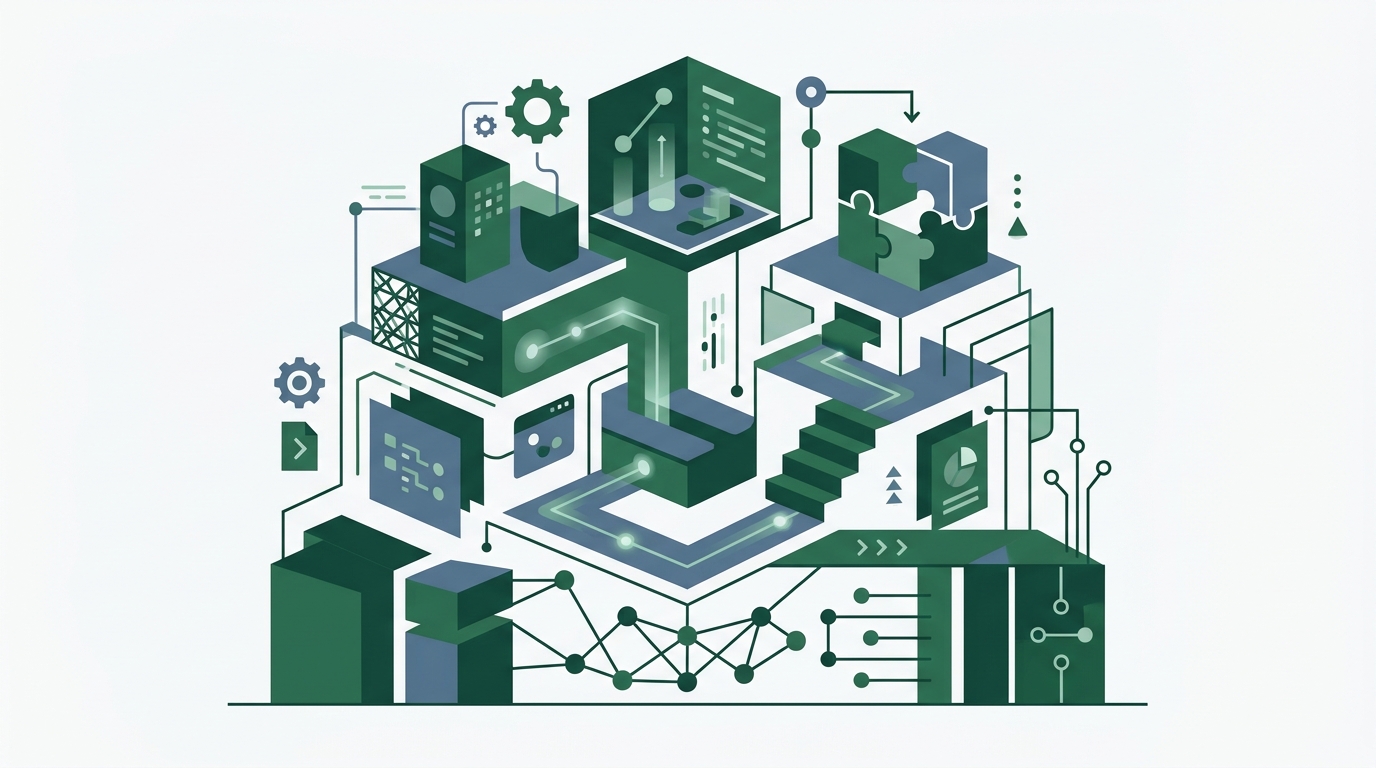
Dependency has three layers: operation, knowledge, and design. The most dangerous is design dependency.
When you keep doing vibe coding, dependency quietly deepens. While writing the trilogy, even I had moments where I felt anxious that “if Cursor disappeared, I might be done.”
To organize that anxiety, I broke it down into three layers. The remedy changes depending on which layer you’re in. First, know where you stand. That’s the first step out of dependency.
Layer 1: Operation Dependency (Low Risk)
This refers to becoming accustomed to shortcuts and UI operations. Once Cursor’s Tab completion becomes second nature, your hands freeze when you go back to VS Code.
I’ve experienced this. After using Cursor for three months, when I worked in VS Code, I hit the Tab key in vain over and over. The completion didn’t come up and for a moment I thought, “Is it broken?”
But this isn’t fatal. It’s just a switching-cost issue, and time will solve it. Use a different tool for a week and your hands will move. It’s just a matter of updating muscle memory.
Layer 2: Knowledge Dependency (Medium Risk)
A state of continuing to use AI-generated code without understanding what it means. This is the layer Truell described as “closing your eyes.”
When errors appear, you throw them entirely to the AI. It gets fixed, but you don’t know why. When the tool changes, you can’t solve the same problem.
I think I was in this layer too, before writing the trilogy. Days of letting things slide with “well, AI will fix it anyway.” The second installment of the trilogy, “Vibe & Verify,” was written as a technique to lower the risk of this layer. Just by having a habit of verifying, you can return from Layer 2 to Layer 1.
Layer 3: Design Dependency (High Risk)
A state where project design assumes a specific tool. This is the most dangerous.
Here’s a concrete example. Cases where all design policies are written in Cursor’s .cursorrules. The criteria for architectural decisions, the coding conventions, the security requirements. Everything is locked into a Cursor-specific format.
The moment you migrate to a different tool, the foundation of your design crumbles.
GitHub’s Octoverse 2024 report also documents the rapid increase in AI-generated code (GitHub, 2024). Much of the code is becoming AI-derived. If that foundation depends on a specific tool, it’s exactly the “unstable building” Truell describes.
You can tell which layer you’re in with one question.
“What if the AI tool you’re using today disappeared tomorrow?”
If you can immediately say “I’ll be fine,” you’re in Layer 1. If you have to think a bit, Layer 2. If you feel “honestly, that’d be rough,” you’re at the entrance to Layer 3.
Three Principles of Tool-Independent Design. What Remains Even When Tools Change
“Put your design outside the tool,” “Read your code once a month,” and “Deliberately use multiple tools in parallel.” These three drastically reduce risk.
I combined the preventive design from the trilogy with Truell’s warning. Let me lay out my own three principles. None of them require special skills. They’re all things you can start today.
Principle 1: Put Design Documents Outside the Tool
Pull out the design policies from .cursorrules. Re-manage them as tool-independent Markdown. Just create one DESIGN.md at the root of your repository.
What’s important is keeping it in “a format any tool can read.” Don’t lock it into a Cursor-specific format. A design document that stands on its own as plain text is the strongest.
Below is the DESIGN.md template I actually use.
# DESIGN.md (Tool-Independent Design Document)

## Architecture Policy
- Frontend: React + TypeScript
- API design: REST (considering future migration to GraphQL)
- Authentication: JWT + refresh tokens

## Security Requirements
# ← Integrate the CLAUDE.md requirements from the trilogy here
- RLS (Row-Level Security) configured on all tables
- API input validation is mandatory
- Manage secrets via environment variables; hardcoding is prohibited

## Coding Conventions
- Functions under 30 lines
- Errors are handled by the caller
- Test coverage 80% or higher
You can move from Cursor to Claude Code without issue. You can switch to a CLI-style tool like Kilo and still be fine. That’s because the foundation of your design doesn’t shake.
The CLAUDE.md security requirements I wrote in the final installment of the trilogy. Integrate those into DESIGN.md. You’ll get a tool-independent security foundation. Two birds with one stone.
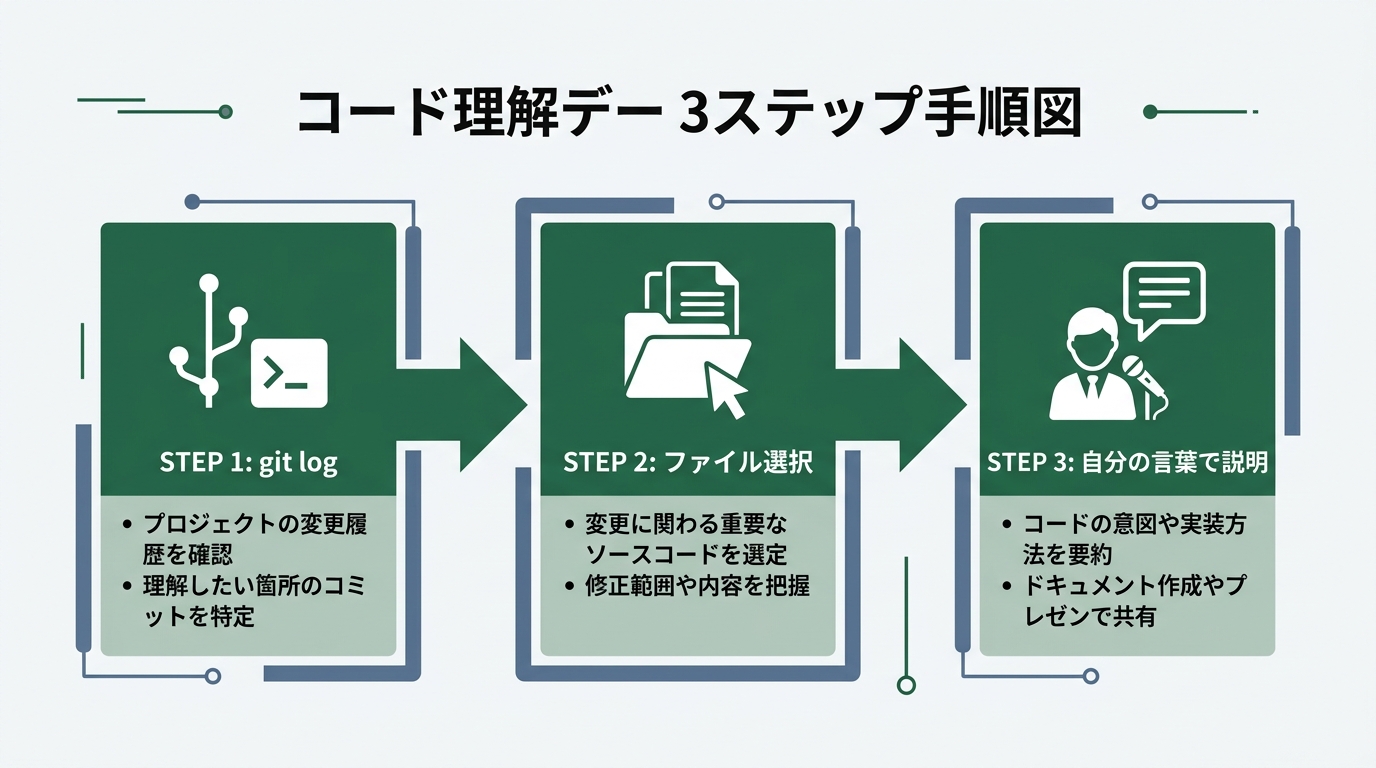
Principle 2: Set Up a Monthly “Code Understanding Day”
Create one day a month where you read AI-generated code yourself. You don’t need to read all of it. Just three important files is enough.
My approach is simple.
- Use git log to list this month’s commits
- Pick three files with the largest change volume
- Read them without comments, and describe the processing flow in your own words
If you can’t describe it, that’s a “knowledge dependency” point. Focus your understanding there. Understanding even 20% of the whole is enough. The trick is not aiming for perfection.
In the past, I was overwhelmed by the brilliance of professional engineers. The philosophy of architectural design. The intuition for performance. I felt I could never match them.
Now AI generates code at that level. But that doesn’t mean “you don’t have to read it.”
Learn “why it’s written this way.” Then your prompting precision for AI improves. The deeper your understanding, the higher the quality of collaboration. That’s what I felt through the trilogy.
The first month will probably take 30 minutes. From the second month, you’ll be able to understand “the parts you didn’t get last month.” Small but certain growth becomes visible. This is the feeling that supports a former burned-out engineer’s comeback.
Principle 3: Deliberately Use Multiple Tools in Parallel
Don’t consolidate everything into one tool. Here’s my current split.
- Cursor: GUI-centered everyday development. Tab completion and inline editing are comfortable
- Claude Code: Used for large-scale changes across files. Suited for agent-like autonomous execution
- GitHub Copilot: For double-checking code reviews
It’s more efficient to stick with one. On the other hand, if one of them disappears, you can keep going with the other two. The monthly cost goes up a little. But as insurance, it’s a cheap price.
The AI coding market in 2026 is in the middle of upheaval. As the Fortune article reported, Cursor’s edge isn’t eternal either.
Last year, Cursor was overwhelmingly dominant. This year, Claude Code is rapidly catching up. Next year, yet another tool may rise. Given this pace of change, betting on a single tool is too risky a choice.
It’s the same structure as concentrating an investment in one stock. If you diversify, you can respond when the market moves. The same thinking applies to development tools, I believe.
Which Type Are You? Today’s Action by Dependency Level
Determine your type and decide on one thing to do today.
You’re probably wondering “what should I be doing?” I’ve organized one concrete action you can take today, for each of four types. You don’t need to do them all. Please pick just the one that applies to you.
Type A: Beginners With Less Than 3 Months of Tool Use
Right now, it’s fine to depend on the tool. The experience of “building something that works” is the top priority. I was the same way once. First, getting something to run is the starting point of everything.
I have just one request. Please create a DESIGN.md today. Five lines is enough. “What are you building,” “what language,” and “things to watch out for in security.” Just writing this is insurance that your future self in six months will thank you for.
Type B: Practitioners With More Than Six Months of Use
There’s a possibility you’re entering Layer 2 (knowledge dependency). Please try one “Code Understanding Day” sometime this week.
Just one important file is enough. Try to see if you can explain code the AI wrote in your own words. Once you try, you’ll feel the depth of your dependency in your body. The more “wait, what is this doing again” moments you have, the closer to Layer 2 you are.
Type C: Leaders Adopting It as a Team
This is the type with the highest Layer 3 risk. Please check today whether your team’s design is locked into Cursor-specific formats.
The cost of migrating to DESIGN.md is nearly zero. Copy the contents of .cursorrules and strip out only the tool-specific notation. It’s a matter of whether you do it or not; there’s no technical wall. Having a common language the whole team can read is the biggest insurance against the chaos of a tool change.
Type D: Those Who Read the Trilogy
You already have the foundation. Please combine the preventive security design with the dependency-avoidance design from this article.
Integrate the CLAUDE.md security requirements from the trilogy into DESIGN.md. That alone completes a tool-independent security foundation. It shouldn’t take even 30 minutes.
Wrap-up. From the Trilogy to the “Next Chapter”
The president of Cursor said it “collapses.” An insider generating $2B in annual revenue is sounding the alarm about how his own tool is used. This fact carries weight.
In the trilogy, I wrote about “security holes.” This time, I stepped into “design holes.” They look like different problems, but I realized the root is the same.
It’s “don’t close your eyes.”
Verify what’s inside the code. Put your design outside the tool. Don’t bet everything on a single tool. They’re all just rephrasings of “face it with your eyes open.”
I was once crushed by professional engineers. I thought I could never reach their level, and I left coding behind. Thanks to AI, I was able to come back. This debt is real.
The feeling of having a master engineer dwell within me. That joy can only be tasted when you understand what’s inside the code. “Closing your eyes” and leaving everything to AI means letting go of that joy. That’s far too wasteful.
In the trilogy, I learned the “defense” of security. This time, I picked up the “stance” of tool design. With both defense and stance in hand, collaborating with AI becomes more enjoyable.
Truell was saying something similar. The problem isn’t the tool but how it’s used. Vibe coding is a means, not an end. Holding a design that doesn’t drown in the means. That’s today’s conclusion.
A new series begins with this article. Next time, as “Technical Track #2,” I want to dive into the specifics of “what to delegate to agents and what to keep for yourself.” Nagi is moving forward in parallel with Business Track #1. I’d be happy if you read it from both the technical and business sides.

正直、一度エンジニアは諦めました。新卒で入った開発会社でバケモノみたいに優秀な人たちに囲まれて、「あ、私はこっち側じゃないな」って悟ったんです。その後はカスタマーサクセスに転向して10年。でもCursorとClaude Codeに出会って、全部変わりました。完璧なコードじゃなくていい。自分の仕事を自分で楽にするコードが書ければ、それでいいんですよ。週末はサウナで整いながら次に作るツールのこと考えてます。