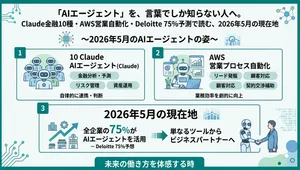
Wait, You're Still Trying to Hire People? — How the $1.7 Trillion Solopreneur Economy Proves One Person Can Do the Work of Ten with AI
Do you really believe hiring more people will grow your revenue?
What you'll learn in this article
- The key point to grasp before reading the full article
- How the issue changes practical decisions after reading
- Which follow-up article is worth opening next
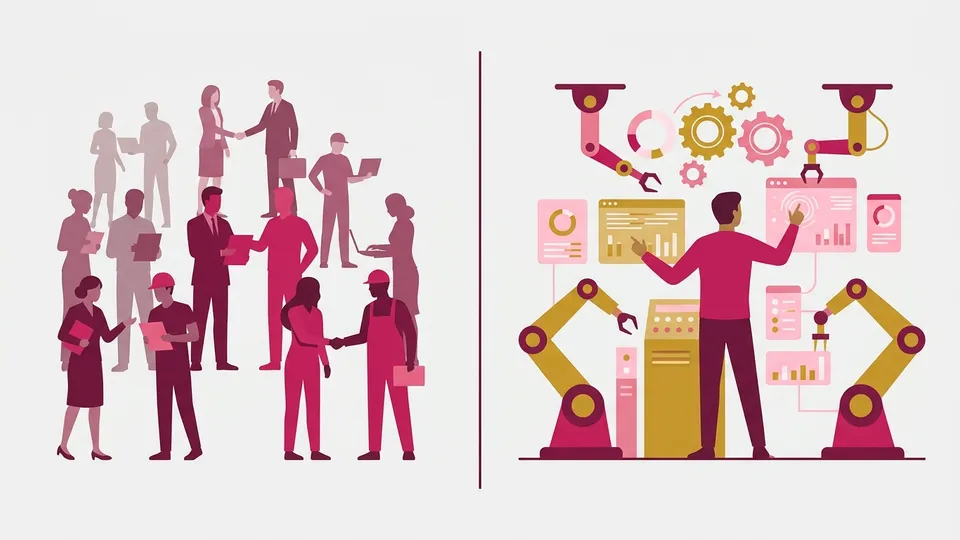
Do you really believe hiring more people will grow your revenue?
I used to believe that too. When I went from freelancing to running my own company, the first thing I tried was “hiring an assistant.”
The result? My monthly payroll went up by 150,000 yen. My time got eaten up by training, and revenue stayed flat. I ended the contract after three months.
But then, the moment I started paying 10,000 yen a month for AI tools, everything changed.
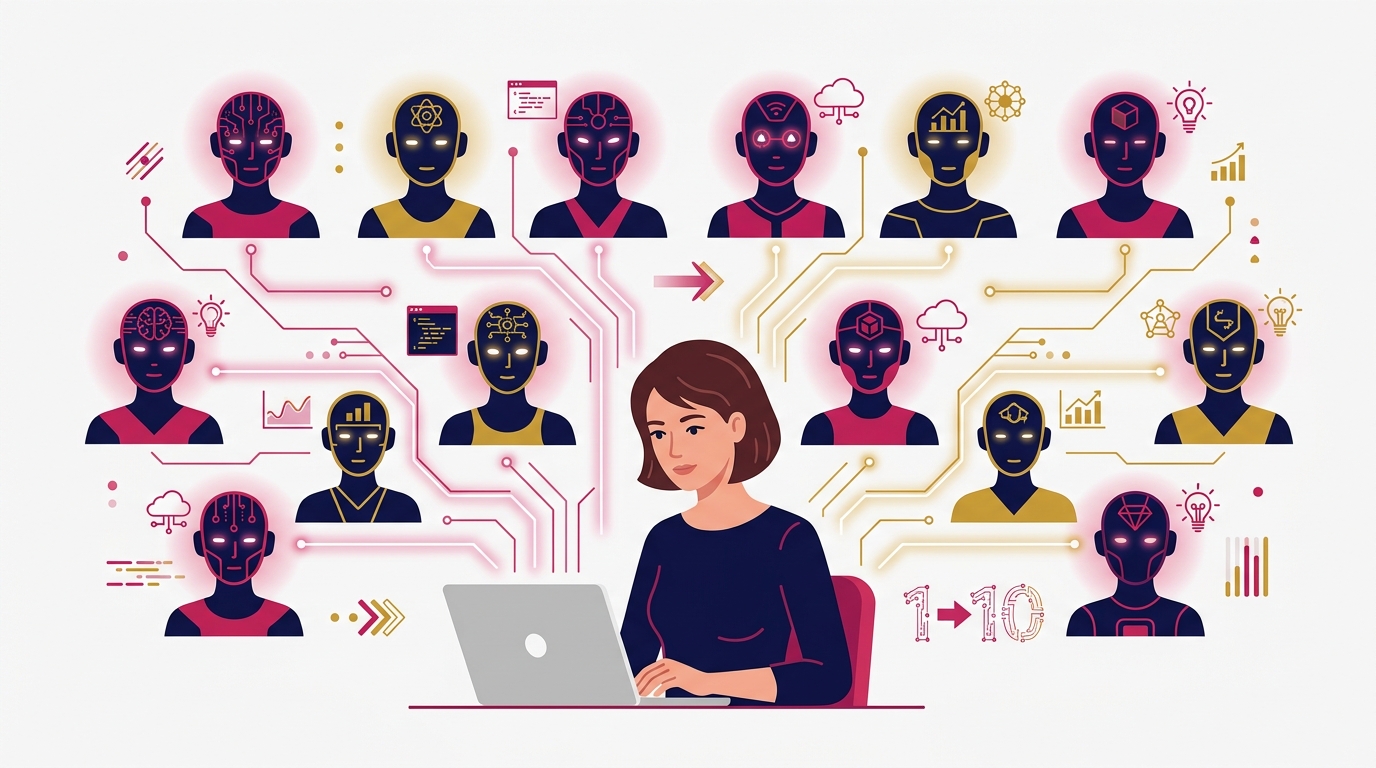
Email replies, research, drafting social media posts, processing invoices. I handed it all over to AI. I used the freed-up time to take on two more consulting clients, and my monthly revenue jumped 1.4x.
And this isn’t just my story.
In the US, there are 29.8 million solopreneurs (people running businesses solo). Together they’re generating $1.7 trillion (about 255 trillion yen) in GDP. Inc.com is calling this phenomenon “the $1.7 trillion moment.”
The “one-person $1.7 trillion economy.” This is the frontline of business in 2026.
And this wave isn’t some distant story happening only in English-speaking countries. Even in Japan, the story “Make 300,000 yen a month just by packaging up your corporate experience and selling it” recently trended on SmartNews. I’m now getting at least three DMs a week from people saying “I want to go independent but I’m worried about doing it alone.”
In this article, I’ll break down the solopreneur economy with hard numbers. Then I’ll walk you through exactly what steps you—right here in Japan—can take starting today.
29.8 Million People Generating $1.7 Trillion. The “One-Person Economy” by the Numbers
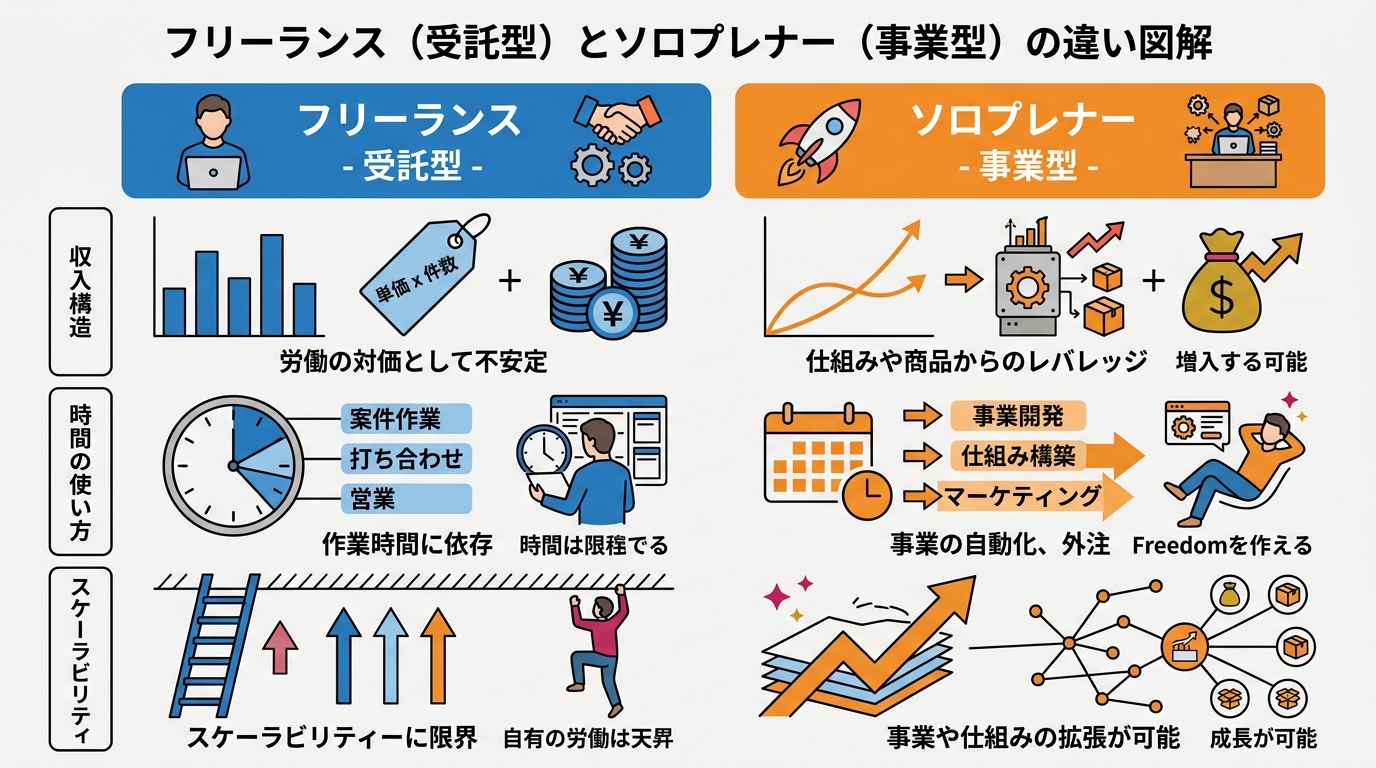
If you’re thinking “Solopreneur is basically just freelancer, right?”—hold on.
A freelancer is “someone who takes on other people’s work.” A solopreneur is “someone who owns their own business.” That difference matters a lot.
Let’s look at the US numbers.
According to MBO Partners’ 2025 study, there are 72.9 million independent workers in America. Of those, 27.6 million are full-time. That’s basically flat year-over-year, which means we’ve already moved past the “boom” phase and into the “established” phase.
The income data is what really stands out. There are now 5.6 million independent workers earning over $100,000 (about 15 million yen) a year. That’s up 19% year-over-year, an all-time high.
“Solo but high-income” is becoming the new normal.
US Census data shows there are 29.8 million non-employer businesses. Together they generate $1.7 trillion (about 255 trillion yen)—6.8% of total US GDP (Inc.com).
QuickBooks’ 2024 entrepreneurship survey also has interesting data. 56% of solopreneurs started their businesses after 2020. 57% said they “needed another income stream because of inflation.” So COVID and rising prices accelerated the shift toward a “life that doesn’t depend on a company.”
I’m literally one of the people who caught this wave. I quit my job in 2020.
There’s another number you shouldn’t miss. According to founderreports.com’s 2026 statistics, 77% of solopreneurs are profitable from year one. So the worry of “can I actually make a living if I go solo?”—the data says you’re worrying way too much.
20% are pulling in $100K–$300K (about 15–45 million yen) a year with zero employees. The image of “solo = small” is officially outdated.
74% Have Started Using AI. Why the “Limit of One Person” Has Disappeared
If it were just that solopreneurs were increasing, this wouldn’t really be a story worth shouting about.
The real shift is that “AI broke the ceiling on what one person can do.”
In the same MBO Partners study, 74% of independent workers said they’re using generative AI in their work. The previous year it was 65%, so it jumped 9 percentage points in just one year.
A joint study by Zoom and Upwork shows even more concrete numbers.
- 91% of solopreneurs who adopted AI said “administrative workload decreased”
- 74% said they were “able to scale their business without hiring people”
- 64% admitted “we wouldn’t have grown the way we did without AI”
These three numbers? I feel them in my bones.
In my case, I was running social media marketing consulting while also doing my own content. Half my day was being consumed by “tasks.” Proposal writing for clients, competitor research, social media posting schedules. I was doing it all solo.
After handing it over to AI, drafting proposals went from 30 minutes to 5. Competitor research went from 1 hour to 15 minutes. Drafting social media posts went from 2 hours to 20 minutes. That’s about 3 hours freed up per day.
I used that freed time for more client meetings. My close rate went up, and monthly revenue grew. That’s how it worked.
But there’s one thing I want to flag here.
SoloBusinessHub cites data claiming “AI agent adoption increases revenue by 340% on average.” It’s an impressive number. But this is SoloBusinessHub’s own aggregation—it’s not a release from a major research firm like MBO Partners or McKinsey. I think it’s worth keeping in mind as a reference point, but taking that “340%” at face value would be risky.
What we can say with confidence is the fact MBO Partners confirmed: “5.6 million people earning $100K+, up 19% YoY.” The timing of when AI adoption took off perfectly overlaps with when high-income solopreneurs surged. I won’t claim causation outright, but the correlation is clear.
$4.5M Run Rate Solo. The Shockwave of Polsia and the “One-Person Unicorn”
“Okay, I get the theory. But how far can one person actually go?”
The latest answer to this question is Ben Broca’s Polsia.
Fortune featured him on March 26, 2026 as a “one-person unicorn.” Broca—an early member of Travis Kalanick’s CloudKitchens—launched the platform called Polsia entirely on his own.
According to the Fortune article, Ben Broca has publicly disclosed a $4.5 million (about 670 million yen) revenue run rate on LinkedIn. Zero full-time employees. That said, legal and infrastructure work is outsourced to external teams, so he’s not literally running everything 100% alone. Even so, “CEO and sole employee” with a $4.5M run rate is plenty impressive.
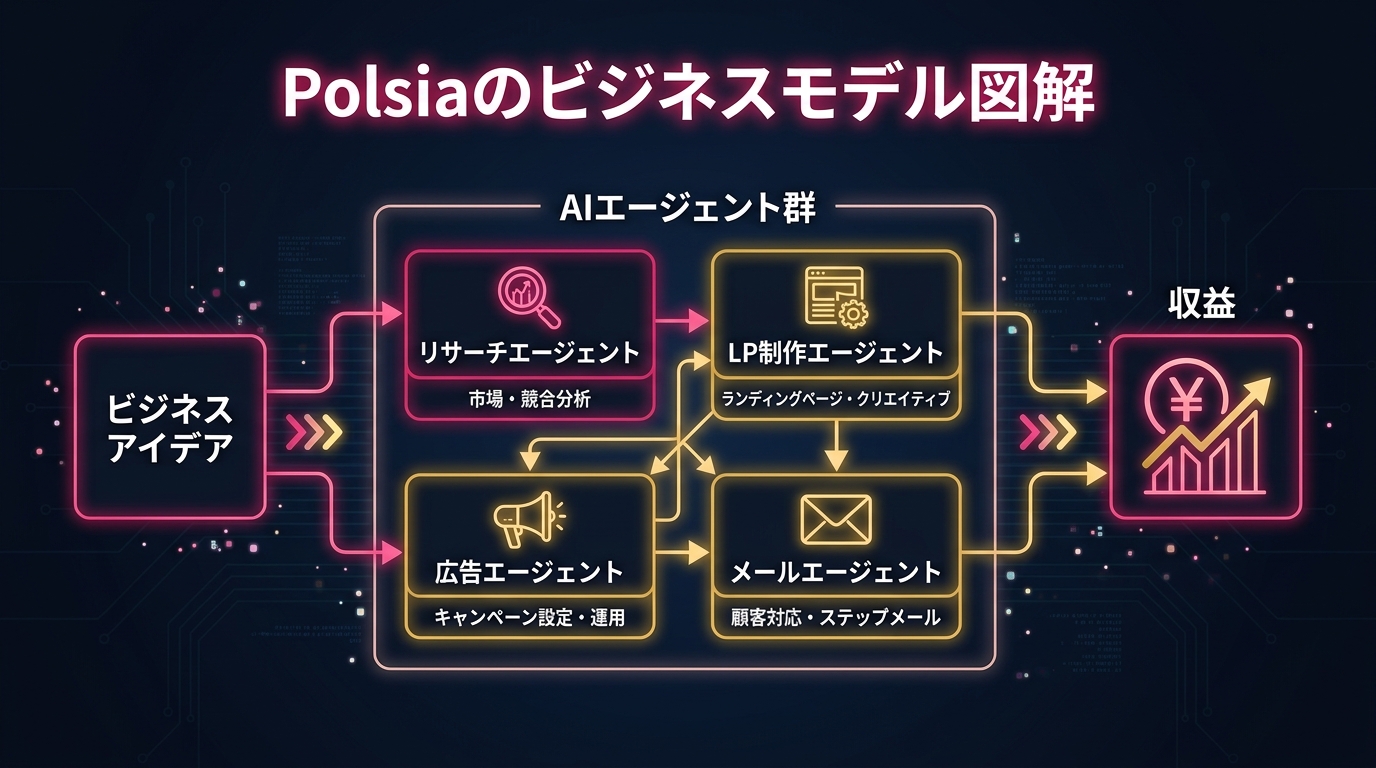
Here’s how Polsia works. A user inputs a business idea. From there, AI agents handle market research, landing page creation, Meta ad delivery, and cold email outreach—all fully automated. Apparently it’s managing operations for over 1,000 businesses simultaneously.
Ben Broca puts it like this.
Polsia is evangelizing solopreneurship. We want to give the 99% of people who aren’t in tech a chance to survive in the AI economy
The part that hit me was this. You don’t have to be in Silicon Valley, you don’t have to be an engineer—if you use AI, you can run a business. This “democratization” is the essence of the solopreneur economy.
Of course, Polsia is an extreme example. Not everyone can pull in 670 million yen a year solo.
Even so, I see this case as proof that “the ceiling has disappeared.” The upper bound of what one person can do has shifted by entire orders of magnitude thanks to AI.
It’s not just Polsia. Inc.com is also covering this trend as “the no-employee billion-dollar startup.” Thanks to the surge in AI-related investment money, tools that didn’t exist a year ago are now available for a few thousand yen a month. For solopreneurs, there’s never been a more favorable tailwind than this era.
My AI Stack Fully Revealed. How I Run “10 People’s Worth” of Work for 10,000 Yen a Month
“Cool stories. But what should I actually start with?”
Here’s the main event. I’ll show you my entire AI stack (combination of AI tools).
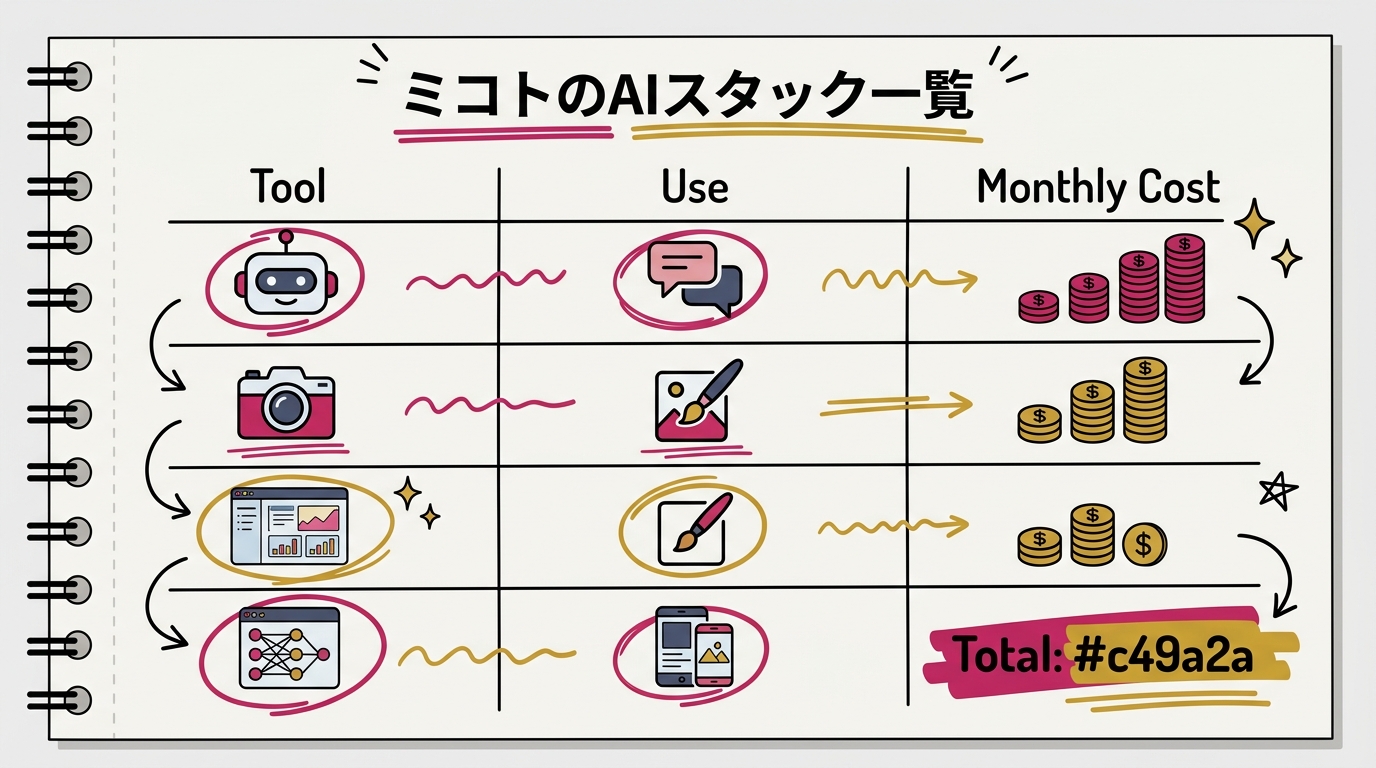
My AI Stack (as of April 2026)
| Tool | Purpose | Monthly Cost |
|---|---|---|
| ChatGPT Plus | Proposal drafts, research, brainstorming | ~3,000 yen |
| Notion AI | Meeting notes, task management | ~1,500 yen |
| Canva Pro | Social media images, presentations | ~1,500 yen |
| Zapier Free | Cross-tool automation | 0 yen |
| Fireflies AI | Meeting transcription | ~2,000 yen |
Total: about 8,000 yen a month. Around 100,000 yen a year.
According to SoloBusinessHub, the average solopreneur AI stack runs $3,000–$12,000 a year (about 450,000–1.8 million yen). Mine is even cheaper than the low end. And it still works just fine.
The key is “don’t have AI do everything.”
In my case, building client relationships and making final strategic decisions—those I absolutely do myself. What I delegate to AI is only the “task” part. Without drawing that line, you end up being jerked around by AI and actually losing efficiency.
Let me show you one specific workflow.
Client proposal creation flow (time required: 25 minutes)
- Fireflies AI auto-transcribes the meeting (5 min, automated)
- Paste the transcript into ChatGPT and say “extract 3 issues and a proposal outline” (3 min)
- Build the proposal story myself based on the outline (10 min)
- Polish the format with Notion AI and convert to PDF (5 min)
- Zapier auto-sends the completed PDF to the client’s Slack (2 min, automated)
This used to take me 2 hours. Now it’s 25 minutes—so I’ve freed up 1 hour and 35 minutes for other work. If you make five proposals a week, that’s nearly 8 hours of week freed up.
How you use that freed-up time is what separates solopreneur revenue outcomes.
Let me share another one: my social media workflow.
Instagram weekly batch creation (time required: 40 min/week)
- Ask ChatGPT “give me 5 social media marketing topics for this week” (3 min)
- Generate “a caption under 130 characters plus 5 hashtags” for each topic (5 min)
- Pour the text into a Canva Pro image template (15 min)
- Build a posting schedule in Notion AI (5 min)
- Rewrite everything in my own voice (12 min)
This used to take 30 minutes a day—2.5 hours a week. Now it’s compressed to 40 minutes. But the last step—“rewrite in my own voice”—I absolutely never skip. If you post AI-generated text as-is, your followers will catch it. My readers come to read “my words,” not AI’s words.
The “Revenue Wall” 13.03 Million Japanese Freelancers Are Missing
So far I’ve focused on the US. But what about Japan?
According to Lancers’ 2024 Freelance Reality Survey, Japan’s freelance population is 13.03 million. The economic scale is 20.32 trillion yen, growing about 40% over the past decade.
The numbers look healthy on the surface. But peek inside and you see the problem.
In a Workship Magazine survey, generative AI usage among Japanese freelancers is still below 30%. And about half said they “have little interest in using AI.”
The US is at 74%. Japan is below 30%. This gap is the true identity of the “revenue wall,” in my view.
Why? Because people who aren’t using AI can’t escape the “trading time for money” model.
You take work at X yen per hour and work 8 hours a day. Your monthly revenue ceiling is locked in. Even though you could handle more than double the workload in the same 8 hours using AI, so many people keep grinding away on their own time, refusing to invest in tools.
I had a consulting client with this exact pattern.
A web designer in her 30s. Her max was three projects per month. She told me building one landing page—structure, design, coding—took two full days.
I suggested “draft the layout in Canva, have ChatGPT generate the copy.” She pushed back: “isn’t relying on AI cutting corners?”
But she gave it a try. The time to build one LP went from 2 days to half a day. Her monthly project count went from 3 to 7, and revenue more than doubled.
She told me later: “It’s not cutting corners—I can now spend that extra time being more attentive to clients.”
Another example. A handmade crafter in her 40s, stuck at a monthly revenue ceiling of 150,000 yen. She did product photography, descriptions, and social media all herself, and her max was 2 new products a month.
Draft product descriptions in ChatGPT. Add text to product photos in Canva. Once I taught her that flow, her new product pace shifted from 2 per month to 5. Monthly revenue grew from 150,000 yen to 270,000 yen.
There are three reasons Japanese freelancers don’t use AI: “they don’t know,” “they’re scared,” and “they assume it won’t work for their kind of work.” The crafter also initially said “AI has nothing to do with my work.”
If you don’t know, learn now. If you’re scared, just try ChatGPT Plus for 3,000 yen a month. If you think it’s “not relevant”—the fact that you’re reading this article means you’re already on the side where it is relevant.
The key to breaking through the revenue wall is already in your pocket.
The “One-Person Revolution” Starts Today. My 3 Recommended First Steps
For those of you thinking “alright, let me try this”—here are the three things to do in your first week.
Step 1: Track your “task time” (Days 1–3)
For 3 days, record what you spend time on. How many minutes on email, how many on research, how many on document creation. Rough estimates are fine.
This log becomes the material for deciding “what to hand off to AI.” In my experience, 30–40% of your time is being consumed by “tasks that don’t have to be done by you.”
Step 2: Pay for ChatGPT Plus and delegate “one task” (Days 4–5)
Don’t try to AI-ify everything at once. Pick just one thing first.
My recommendation: “email drafts.” It’s a daily task, and even if the AI’s output isn’t usable as-is, it’s easy to revise.
Just instruct it: “Reply politely to this email. My position is X, what I want to convey is Y.” At first, you might get weird formal language. Issue 2–3 revision prompts and the tone will start to match.
Step 3: Use the freed time on “revenue-generating work” (Days 6–7)
This is the most important part. If you free up time with AI and then spend that time scrolling social media, what’s the point?
What do you do with that extra 30 minutes? Three options.
- Send a new business DM
- Send a follow-up to an existing client
- Update your own content (social posts, blog, portfolio)
Pick anything you want, but choose “an action closer to money.” AI creates time for you, but it doesn’t earn money for you.
In my case, I put all of my freed 30 minutes into “follow-ups with existing clients.” Getting additional projects from people who already trust you is more efficient than chasing new business. Three months after I started doing follow-ups, my average client contract length grew from 4 months to 7 months.
Deciding where to “re-invest the time” determines whether AI stack adoption succeeds. People who feel satisfied just installing tools versus people who convert freed time into revenue. The gap a year later is bigger than you’d expect.
Summary. “First Movers Win”—and the Data Proves It
Let me organize everything.
In the US, 29.8 million solopreneurs are creating a $1.7 trillion economy. 74% of independent workers have started using AI, and the number of people earning over $100K has surged to 5.6 million (MBO Partners 2025).
Polsia’s Ben Broca pulled off a $4.5M run rate as CEO and sole employee (Fortune). It’s an extreme example, but proof that the “ceiling for one person” has shifted by orders of magnitude thanks to AI.
Japan has 13.03 million freelancers, but AI adoption is still below 30%. That’s where the opportunity is. The structure is already clear: those who move first will break through the revenue wall.
What I most wanted to convey in this article isn’t the simple message of “use AI.” It’s about reinvesting the time AI frees up into “actions closer to revenue.” That’s the structure that lets even one person scale a business.
Watching my consulting clients, I’ve realized something. The difference between people who succeed and those who don’t isn’t “how they use the tools.” It’s “how they use the freed time.” AI is a means, not an end.
You remember what I always say?
“In the end, first movers win.”
This time it’s not just my gut feeling—the data backs it up. MBO Partners’ numbers, Polsia’s results, all of it shows that “the people who moved first are winning.”
Start with ChatGPT Plus for 3,000 yen a month. That alone will change the landscape.
I took that first step three years ago. Now, with an AI stack costing 10,000 yen a month, I’m generating more than 3x the revenue I had as a corporate employee.
There’s no reason you can’t do it. I guarantee it.
Sources
- MBO Partners: 2025 State of Independence in America Report
- Inc.com: Solopreneurs Are Having a $1.7 Trillion Moment
- Inc.com: The No-Employee, Billion-Dollar Startup
- Fortune: The one-person unicorn — Polsia
- QuickBooks: Entrepreneurship in 2024
- founderreports.com: Solopreneur Statistics 2026
- SoloBusinessHub: Solo Business Trends 2025
- SoloBusinessHub: AI Tools & Digital Employees for Solopreneurs *340% figure is a reference value
- Lancers: Freelance Reality Survey 2024
- Workship Magazine: Freelance AI Usage

女性だからこそ、AIを使いこなさなきゃって思ってる。仕事も、副業も、推し活も、旅行も、全部やりたい。人生一度きりなのに時間は足りないじゃん?だからAIに任せられることは全部任せる。浮いた時間で本当にやりたいことをやる。それがあたしのスタイル。ここにはあたしが実際にやったことをまとめてるだけ。誰かのためになったらいいなって思って書いてるよ。