The CEO Who Called His Own Product a House of Cards — Cursor's Founder Issued a Warning, and the Industry Responded with 5 Answers
In December 2025, Cursor CEO Michael Truell publicly called vibe coding 'shaky foundations.' Six months later, Palo Alto's SHIELD framework and Georgia Tech's CVE data validate every word. Here's the reckoning — and 5 steps to act on it.
What you'll learn in this article
- The key point to grasp before reading the full article
- How the issue changes the way developers should work next
- Which follow-up article is worth opening next
I cannot think of another CEO who publicly criticizes his own product.
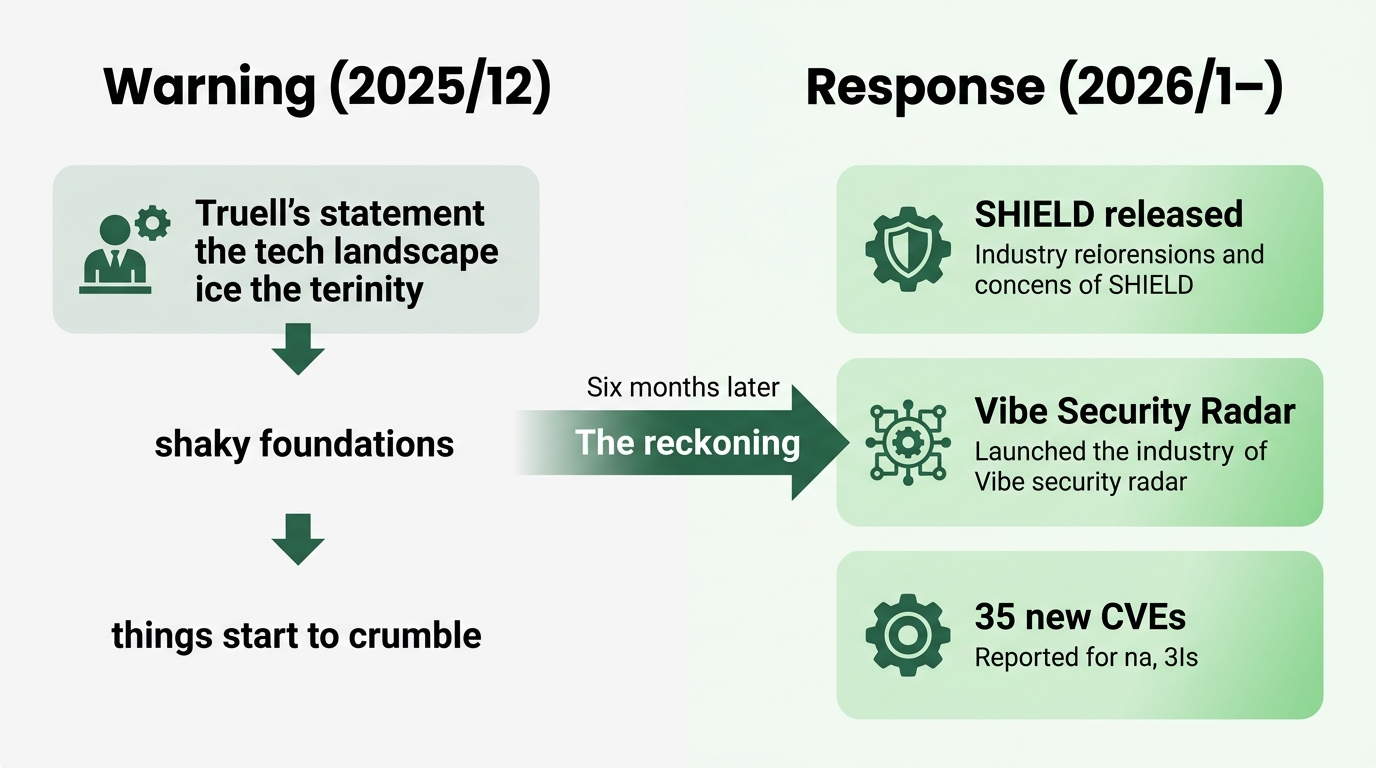
Cursor CEO Michael Truell called vibe coding “shaky foundations.” The target of his words was the very use case that had been driving adoption of his own company’s product. The venue was Fortune Brainstorm AI 2025 (December 2025). Fortune reported it on December 25th under the headline “Cursor CEO warns vibe coding builds ‘shaky foundations.’”
What exactly is shaky? Translating Truell’s words: “You close your eyes, you don’t look at the code, and you have AI build shaky foundations. You stack floor on floor on floor, and eventually it crumbles.” He also used a house analogy: “You have four walls and a roof standing, but no idea what’s under the floor or behind the wiring.” Cursor sits on the crane side of that construction.
After ten years in customer success, I’ve almost never seen a CEO name their product’s weakness in public — unvarnished, with no softening. The usual playbook wraps it in “areas for future improvement” or “responsible use.” Truell didn’t.
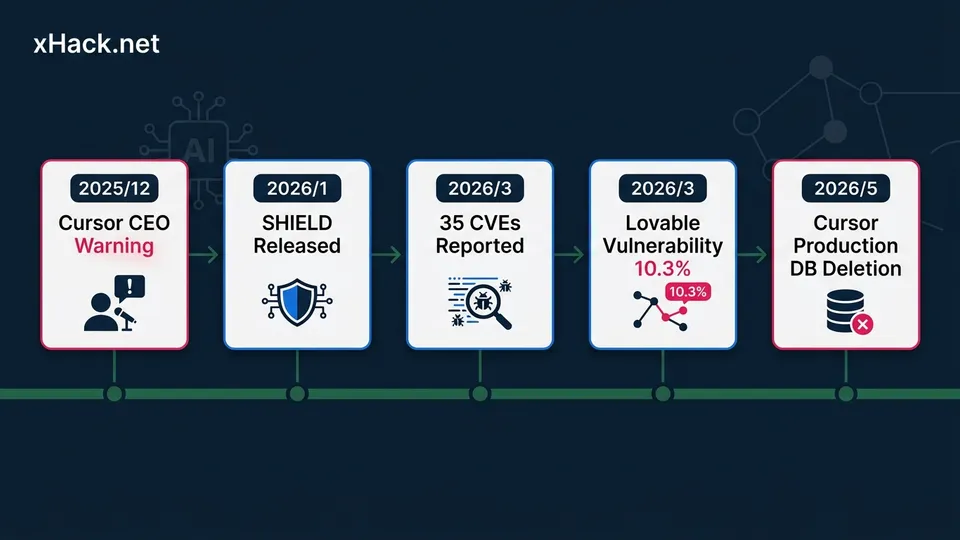
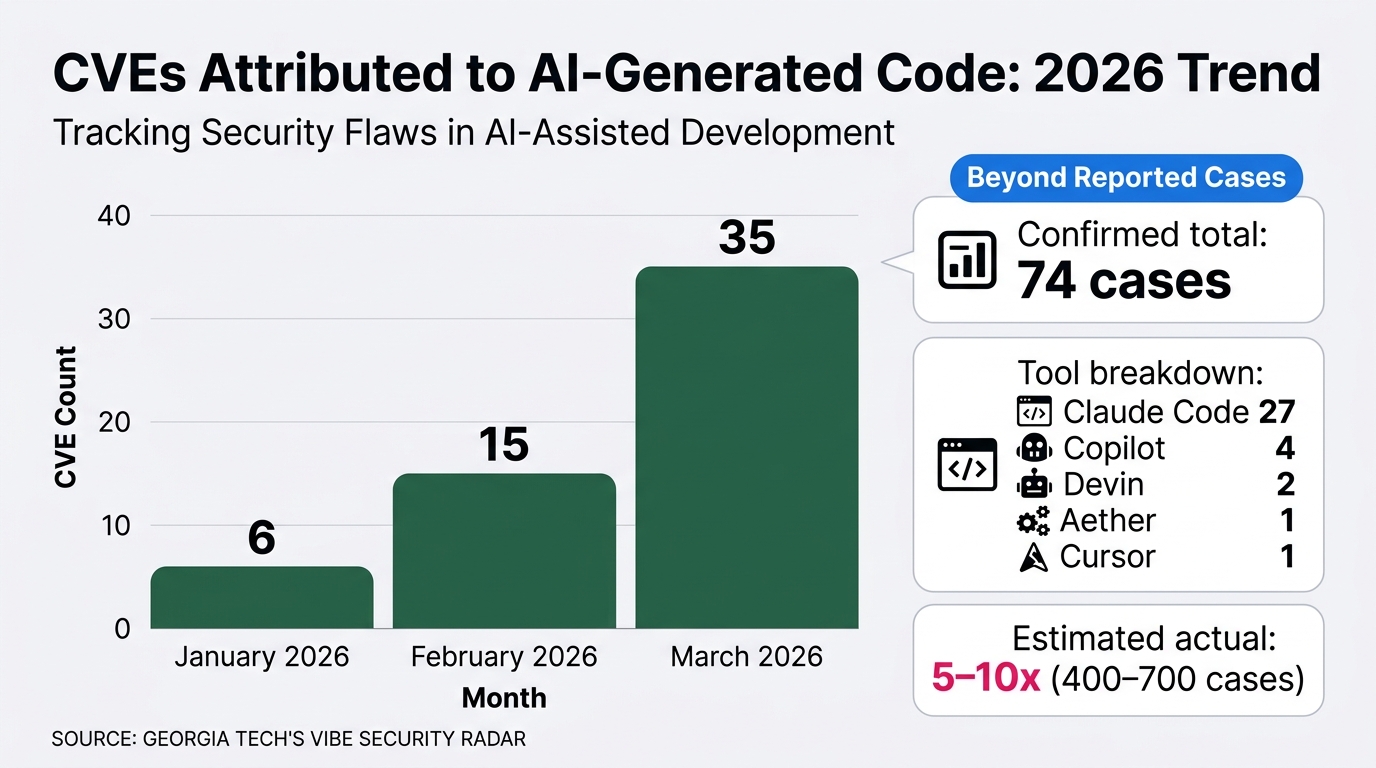
And then five months passed. The industry moved. Palo Alto Networks released a five-letter framework called SHIELD. Researchers at Georgia Tech launched “Vibe Security Radar,” tracking CVEs attributable to AI-generated code month by month: January 6, February 15, March 35. A clean exponential curve.
Truell wasn’t exaggerating. The reckoning arrived in six months. Today’s piece translates that reckoning into five implementation rules.
What It Means When the Toolmaker Himself Fires the Warning Shot
When I first read Truell’s comments, something felt off.
A CEO selling a product normally says “Used correctly, it’s outstanding.” Any caveats usually appear small and buried. Truell went the opposite direction: the very use case Cursor itself had been accelerating — vibe coding — was called “shaky foundations,” by name, from the opening.
Why did he have to say it? The reason is obvious. Accidents were happening in plain view as vibe coding usage expanded.
Looking back at the three-part case series I’ve been writing: Part 1 covered the March 31, 2026 Lovable vulnerability report — 10.3% of apps generated with Lovable were found to contain security flaws (past article here). Part 2 covered the May 5, 2026 Cursor production database deletion — a company engineer using Cursor and Claude Opus executed a command without understanding its blast radius and wiped a live database (past article here).
Each time an incident occurs, two reactions split the developer community: “The user’s fault” vs. “The tool’s fault.” Truell’s statement reads like an answer to that fork: “The tool side has issued its warning. What happens next is a design and operations question.”
A point I keep returning to from my CS background: as long as the product side keeps saying “customers just need to be careful,” the root problem never gets solved. Truell understands that structure. That’s why he aimed his words directly at the use case, not the user.
One clarification to lock in here. Truell didn’t say “don’t use Cursor.” He said “stop using it with your eyes closed and never looking at the code.” Cursor’s product philosophy centers on deeply integrating AI into the editing environment, predicting the next line with full codebase context. It’s designed to be a place where a human reading code integrates with AI suggestions.
The warning’s target was the act of closing your eyes — not the act of using AI. Conflating the two turns a CEO’s precise warning into generic “AI criticism.” I don’t want to read it that way.
The Numbers Backed Him Up — CVEs Hit 6 → 15 → 35 in an Exponential Curve
Half a year after Truell’s statement, data surfaced.
Georgia Tech’s Systems Software & Security Lab (SSLab) launched “Vibe Security Radar” in May 2025 — a project tracking CVEs (Common Vulnerabilities and Exposures: unique IDs assigned to security vulnerabilities worldwide) attributable to AI-generated code, on a monthly basis.
The numbers:
- January 2026: 6
- February 2026: 15
- March 2026: 35
Roughly 6x in three months. In the quarter immediately following Truell’s warning, reported incidents grew exponentially.
The methodology is also interesting. Researchers pull cases from public vulnerability databases, identify the patch commits, then trace backward to “the commit that first introduced the bug.” If that commit contains an AI tool signature — a co-author tag or bot email — it’s flagged as an AI-generated code CVE.
Among the 74 confirmed cases, the tool breakdown: Claude Code 27, GitHub Copilot 4, Devin 2, Aether 1, Cursor 1. Researchers’ estimates go further: “The real number is 5–10x. Between 400 and 700 AI-derived vulnerabilities are sitting in OSS with attribution still pending.” Infosecurity Magazine (published April 2026) drew this estimate out in an interview.
At this point I had to stop myself. Seeing “Claude Code 27” and wanting to read it as “see, Claude Code is the problem” is the wrong interpretation. This is proportional to usage volume — full stop.
I’ve seen this same structure play out in CS work repeatedly. Products with more users generate more bug reports. Products with fewer users don’t generate reports at all. Ranking by raw count without correcting for denominator leads to false conclusions. The Vibe Security Radar data works the same way. The right question isn’t “which tool has the most issues” — it’s “how much are CVEs increasing across AI-generated code overall?”
That increase is undeniable. Truell’s “shaky foundations” forecast this curve.
The Industry’s 5 Answers — Palo Alto Networks’ “SHIELD” Framework
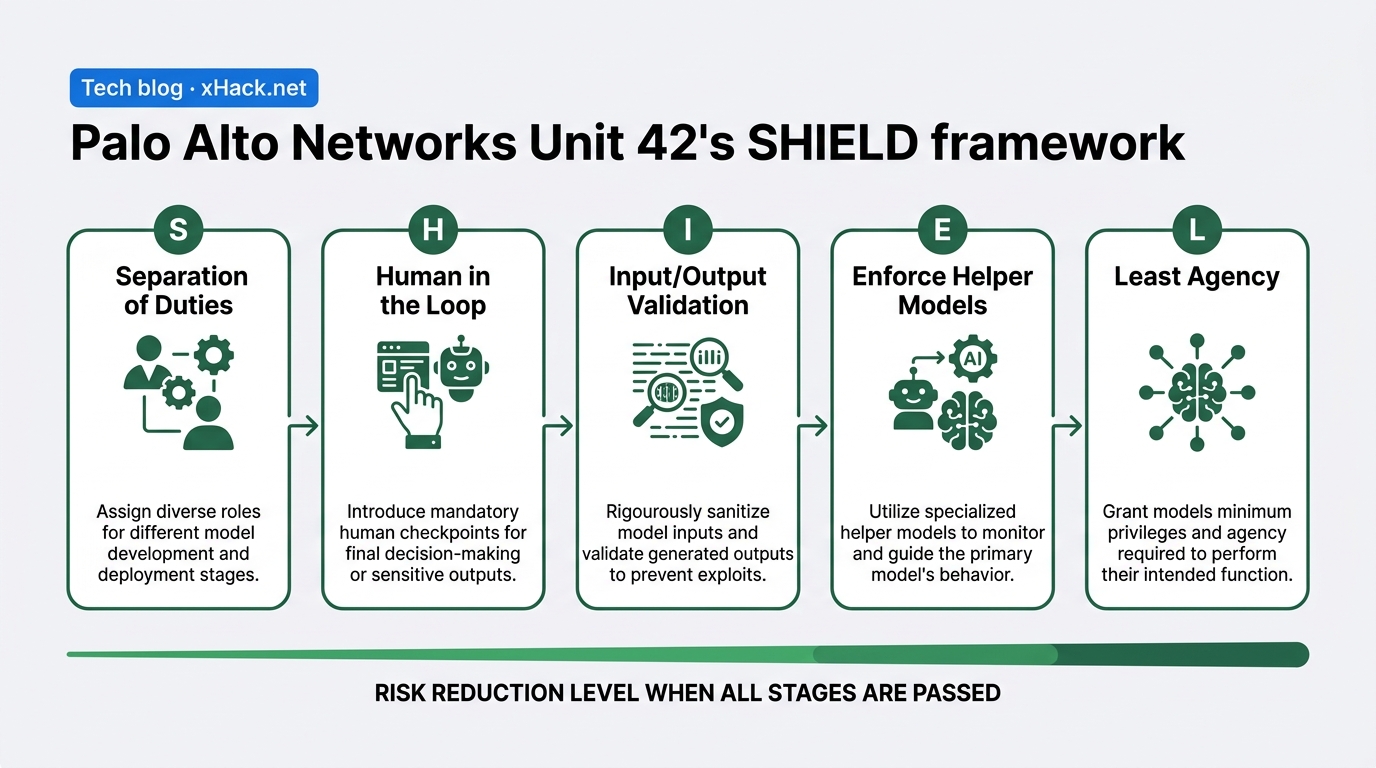
The industry’s answer to the warning came in five letters.
Palo Alto Networks’ threat research division Unit 42 published a framework called “SHIELD” in January 2026. Infosecurity Magazine’s piece “Palo Alto Networks Introduces New Vibe Coding Security Framework” covers the full scope. Security Boulevard (January 2026) has additional detail.
Here’s SHIELD, element by element.
S: Separation of Duties
AI agents run only in development and test environments. Direct access to production (the live environment real users interact with) is off-limits. The AI agents embedded in vibe coding platforms must not be able to reach production databases or deployment permissions directly. The Cursor production DB deletion happened in an environment where this principle was not in operation.
H: Human in the Loop
Secure code review by a human is mandatory for any code affecting critical functionality. PR (pull request — the process of verifying code before merging it into the main branch) approval before merging is non-negotiable. Shipping code because “it worked” alone is prohibited.
I: Input/Output Validation
Do not mix “trusted instructions” and “untrusted data” in a single prompt. Guardrails — mechanisms that enforce boundary conditions — handle the separation. Have AI run its own logic checks. Layer SAST tools (Static Application Security Testing: static analysis tools that find vulnerabilities without running code) on top of that.
E: Enforce Security-Focused Helper Models
Use external, independent helper models to run SAST validation, secret scanning (detecting passwords and API keys embedded in code), and security control verification. Detect vulnerabilities and hardcoded secrets before deployment.
L: Least Agency
Apply the principle of least privilege to every vibe coding platform and AI agent. Each receives only the permissions and capabilities strictly required to perform its role. Everything else is locked down.
Looking across all five, you can see Truell’s “keep your eyes open” warning translated into concrete implementation guidelines. S prepares for production accidents. H anchors the “eyes-open review” role with a human. I and E outsource the “eyes” function to other AI. L minimizes blast radius when something still goes wrong.
A framework this specific appeared within a month of the CEO’s statement. Honestly, I’m impressed. The “industry already has answers — the problem is adoption” line I wrote in the previous installment (CodeGuard trilogy, 5/9) maps cleanly onto SHIELD. Cisco CodeGuard on the tool side, SHIELD on the governance side. Both wheels are turning.
The Trilogy’s Reckoning — What’s in Place and What Isn’t
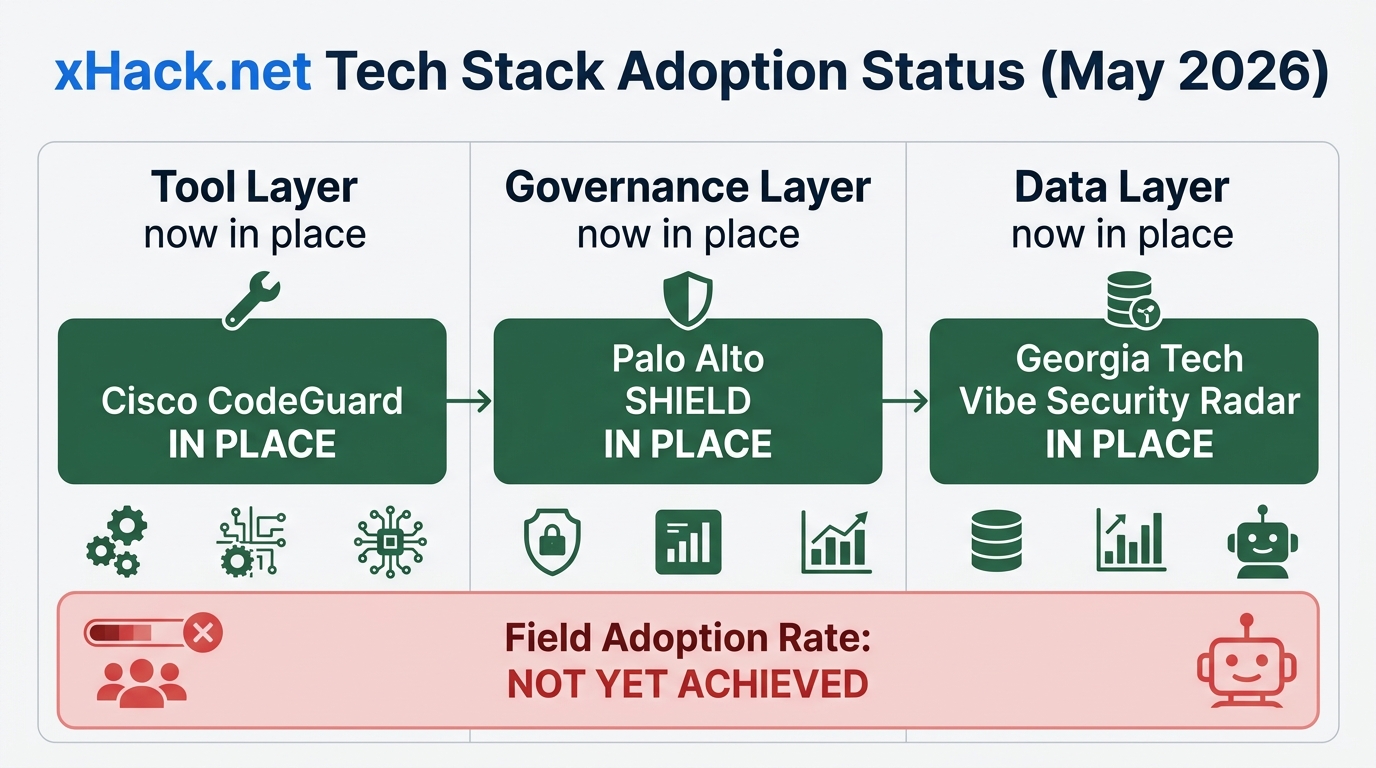
Let me stop and take stock. Across the trilogy (Lovable vulnerabilities · Cursor production DB deletion · CodeGuard trilogy) and this piece — what has come together, and what hasn’t?
What’s in place.
On the tool side: Cisco CodeGuard was released as OSS in October 2025 and donated to CoSAI (Coalition for Secure AI — an industry coalition for AI safety) in February 2026. A static analysis engine for AI-generated code is now openly available.
On the governance side: Palo Alto Networks’ SHIELD arrived in January 2026. Separation of duties, mandatory human review, input/output validation, enforced helper models, least privilege. Implementation rules are now documented.
On the data side: Georgia Tech’s Vibe Security Radar is publishing monthly CVE counts. What was “gut feeling” has become a quantified curve.
Tool. Rules. Data. All three are in place. That means vibe coding security has become a design problem. No longer a “let’s all be careful” campaign.
What isn’t in place.
Adoption rate.
I didn’t learn that CodeGuard had been released in October 2025 until May 2026. That’s on me.
Warnings exist. Tools exist. Rules are documented. Data is being tracked. The reason accidents keep happening anyway is that field adoption is slow.
I only recently revisited the permission design on my own projects to address L. S and H were already part of my workflow, but I and E still aren’t automated. Between “should do this” and “am doing this,” the gap is still real.
I’ve seen this pattern in CS work over and over. Even when good tools arrive, behavior at the ground level changes slowly. What’s different this time is that accidents are happening visibly. The Lovable vulnerabilities and the Cursor incident are serving as adoption accelerants. Grimly, fires accelerate sprinkler installation.
5 Actions for Individual Developers — Translating SHIELD Into This-Week Granularity
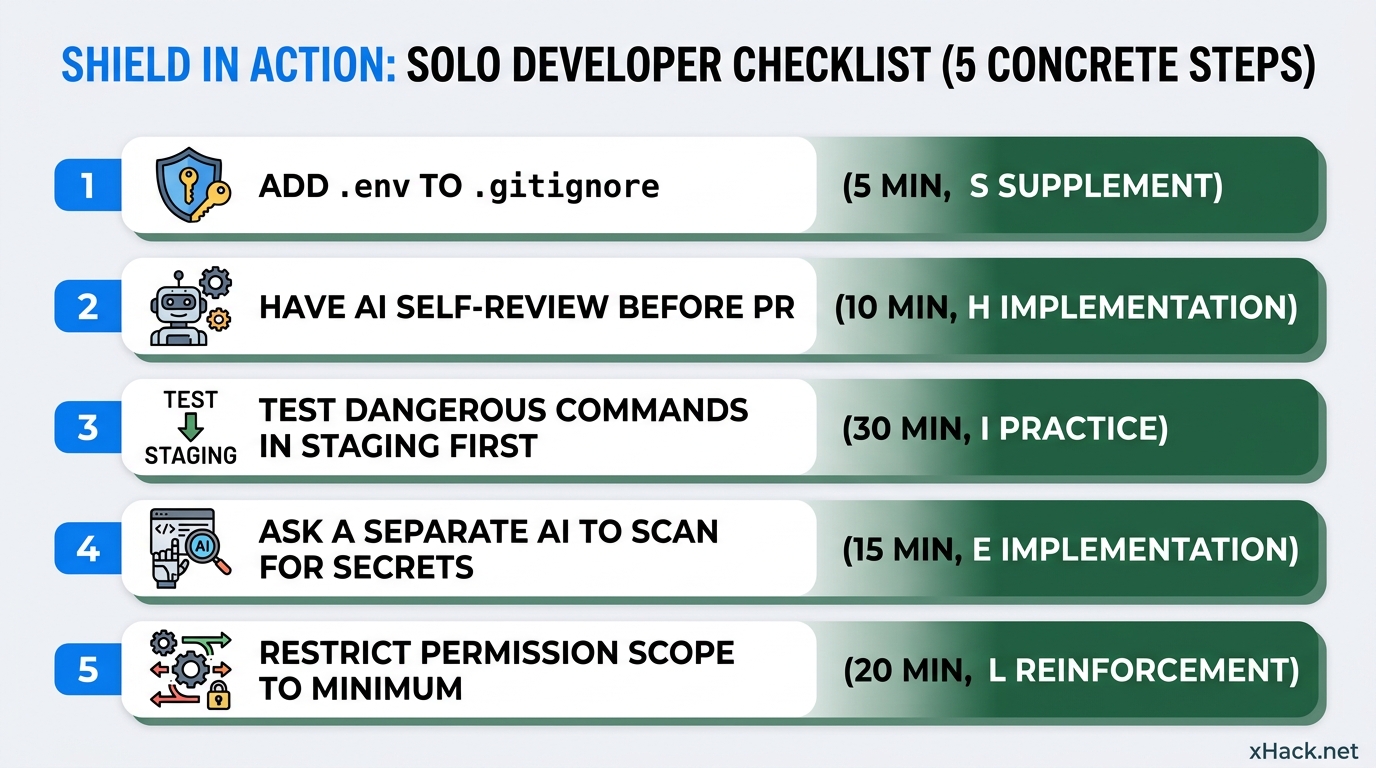
Reading SHIELD as written — enterprise-targeted — makes it feel distant to an individual developer. I felt that way the first time I read it too. So I’ve translated it into 5 actions completable in a single week.
Action 1: “Add .env to .gitignore” (5 min · Supplements S and E)
Lowest cost, highest impact. Open .gitignore at your project root and check whether .env is listed. If it isn’t, add it now. Put API keys, database passwords, and auth tokens in .env, and reference them in code as process.env.XXX.
This eliminates the majority of secret exposure risk. Accidentally pushing to GitHub and instantly publishing credentials to the world is the scariest pattern there is. This is how you preemptively cover SHIELD’s S and E at the individual level.
# One line to add to .gitignore
.env
Action 2: “Have AI self-review before PR” (10 min · Implements H)
Before creating a GitHub PR, have AI review your code. The prompt can be simple:
Name 3 security concerns with this code.
Focus on SQL injection, authentication bypass, and hardcoded secrets.
AI reviews its own generated code with surprising objectivity. “Input validation is missing here.” “This permission scope is too broad.” Not perfect — but capable of eliminating 30% of problems before human review.
SHIELD’s H requires human review. AI review doesn’t replace that, but it works as a supplement. For solo development where “there’s no human reviewer,” AI can serve as an interim stand-in.
Action 3: “Test dangerous commands in staging first” (30 min · Practices I)
Database operations, file deletions, permission changes — commands with large blast radius never go directly to production. Run them in a staging environment (a test environment replicating production) first.
If you don’t have staging, build the procedure for replicating production in a separate environment once. Build it once, and the temptation to “just try it in prod” fades. The core lesson from the Cursor production DB deletion was “tried it in production for the first time.”
Add this to your AI prompts:
Before I run this command, explain its blast radius and rollback procedure.
I want to test in staging first.
Action 4: “Ask a separate AI to scan for secrets” (15 min · Implements E)
Separate the AI that writes code from the AI that reviews it. Take code written in Claude Code and paste it into a separate Claude session — or ChatGPT or Gemini. Ask: “Is any secret information hardcoded in this code?”
AI’s “self-grading” can sometimes be generous. Cross-checking with a different model catches what gets missed. SHIELD’s E calls for an “external, independent helper model.” At the individual level, using a different session or a different vendor’s model is the practical approximation.
Action 5: “Restrict permission scope to minimum” (20 min · Reinforces L)
When issuing API keys, restrict scope to “minimum necessary” rather than “full access.” Don’t grant write permissions for operations that only need reads. For database users, if SELECT is all you need, revoke everything else.
When asking AI about permission design, phrase it this way:
List the minimum permissions this code needs to function —
across API scope, database permissions, and file permissions.
Explain why each one is necessary.
Requiring explanations surfaces AI’s tendency to attach redundant permissions. Weak justifications mean the permission can go.
I designed the action priorities like this:
- By this weekend: Action 1 (
.gitignorecheck). 5 minutes, maximum impact. - Next week: Action 2 (pre-PR AI review) and Action 5 (minimum permission scope).
- This month: Action 3 (staging first) and Action 4 (separate AI scan).
In three months, CVE counts will rise again. Whether you’re ready for what comes after 35 depends on what you do this week.
Conclusion — The Warning Wasn’t Read
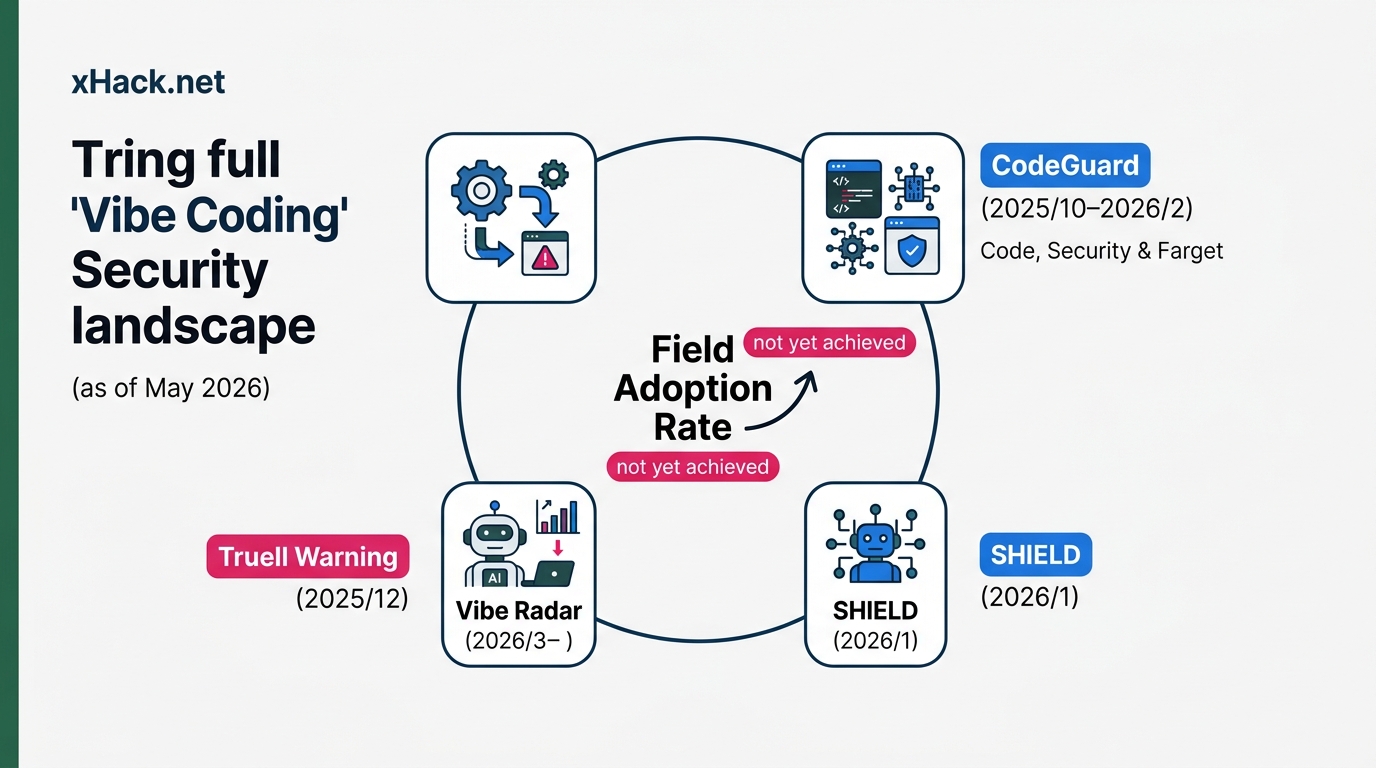
I didn’t dig into Truell’s December 2025 warning until May 2026. That’s my failure.
Warnings alone would be one thing. The tools exist. The rules are documented. The data is being tracked. The reason accidents keep happening is slow field adoption.
“The industry already has answers — the problem is adoption” — that structure I wrote in the previous piece has become even clearer here. Cisco CodeGuard, Palo Alto SHIELD, Georgia Tech Vibe Security Radar. All three existing together is what upgrades vibe coding from a “be careful” problem to a “design it properly” problem.
What you can do today starts with checking .gitignore. Five minutes. Action 1 alone covers the bulk of S and E.
I’ve seen this pattern in CS too many times to count. High-impact actions are exactly the ones that get deferred. Trading a 5-minute task today for tomorrow’s incident isn’t a trade worth making.
There was a time I thought professional engineers were simply out of reach. AI brought that skill within arm’s length. The same logic applies here: a world-class security engineer’s design thinking has been distilled into a 5-letter framework called SHIELD, sitting in public view for anyone to read. Not reading it is leaving something on the table.
Six months since the day a CEO issued a warning. In the next six months, I’m putting all 5 actions into my own projects. One step at a time.
Sources & References
- Cursor CEO Michael Truell’s statement: Fortune “Cursor CEO warns vibe coding builds ‘shaky foundations’” (December 25, 2025)
- Palo Alto Networks SHIELD: Infosecurity Magazine “Palo Alto Networks Introduces New Vibe Coding Security Framework” (January 2026)
- Georgia Tech Vibe Security Radar: Infosecurity Magazine “How Security Leaders Can Safeguard Against Vibe Coding Security Risks” (April 2026)
- Cisco Project CodeGuard: Cisco Official Blog (October 16, 2025)
- Vibe Coding Trilogy Part 1 (Lovable Vulnerability): Past article here
- Vibe Coding Trilogy Part 2 (Cursor Production DB Deletion): Past article here
- Vibe Coding Trilogy Part 3 (CodeGuard): Past article here

正直、一度エンジニアは諦めました。新卒で入った開発会社でバケモノみたいに優秀な人たちに囲まれて、「あ、私はこっち側じゃないな」って悟ったんです。その後はカスタマーサクセスに転向して10年。でもCursorとClaude Codeに出会って、全部変わりました。完璧なコードじゃなくていい。自分の仕事を自分で楽にするコードが書ければ、それでいいんですよ。週末はサウナで整いながら次に作るツールのこと考えてます。