The $480B Industry Where Half Earn Under $10K: The 'Expert Vacancy' in the Creator Economy Only You — Yet to Publish — Can Fill
Conceptual frame: 'The Expert Vacancy'
What you'll learn in this article
- The key point to grasp before reading the full article
- How the issue changes practical decisions after reading
- Which follow-up article is worth opening next

Conceptual frame: “The Expert Vacancy”
Goldman Sachs predicted an industry would “reach $480 billion by 2027.” That’s roughly ¥72 trillion in yen. I’m talking about the creator economy — the economic zone where individuals earn revenue from content.
Participants worldwide already exceed 200 million.
But here’s the thing. When I peeked inside this massive market, I saw a fascinating structure. Half of them aren’t even hitting $10K (about ¥1.5M) per year. The layer earning over $100K — the so-called “pros” — is just 4%.
A 200-million-person market where most of the seats sit empty. I call this “the expert vacancy.”
In this article, I’m going to use Goldman Sachs’ report and the latest survey data to show you exactly what this vacancy looks like. Especially why you — someone who has the skills but hasn’t started publishing yet — are in the most advantageous position right now. I’ll explain with numbers.
Some of you read my previous piece on the $1.7 trillion solopreneur economy. And the 10x Founder subtraction map. This article is the answer to “Okay, but specifically where do I earn?”
Reading What Goldman Sachs Means by “$480 Billion” — My Take
Let me start with the numbers.
According to Goldman Sachs’ report, the creator economy was about $250 billion as of 2024. They project it’ll nearly double to $480 billion by 2027.
“Nearly double” is pretty bullish language coming from an investment bank.
Goldman Sachs highlights three points.
The pace of creator population growth. The current 50 million is projected to compound at 10–20% annually. That’s the same growth rate as SaaS (subscription software services) companies. When you think about it calmly, individual economic activity growing at SaaS pace is kind of wild, right?
Revenue pillars are shifting. Right now, brand deals (corporate tie-up campaigns) make up about 70% of total revenue. But subscriptions and direct payments from followers are growing fast. The Influencer Marketing Factory’s 2026 report showed ad revenue at 21.6% versus merch + affiliate (performance-based ads) at a combined 21.2% — nearly tied.
“Earning without depending on corporate deals” is becoming reality.
The “pro” ratio doesn’t change. Goldman Sachs predicts the share of pro creators earning over $100K will stay around 4% of the total. Even as the market doubles, the top layer’s ratio stays the same.
Here’s the catch. The market doubles, but the pro ratio stays at 4%. So what’s happening in the remaining 96% of the seats? That’s where the “expert vacancy” lives.
Look at Japan and it gets even more interesting. According to the Creator Economy Association’s 2025 survey, the domestic market is ¥2.0894 trillion. Annual average growth rate of about 15.5%. What you should pay attention to is the potential market — including IP (intellectual property) businesses and traditional media industries, it’s about ¥14.5866 trillion.
That’s roughly 7x the current market still waiting to be tapped.
48.7% Earn Under $10K. Why I Call This “The Expert Vacancy”
The Influencer Marketing Factory released a survey. January 2026, 1,000 US creators surveyed. I want you to look at these results.
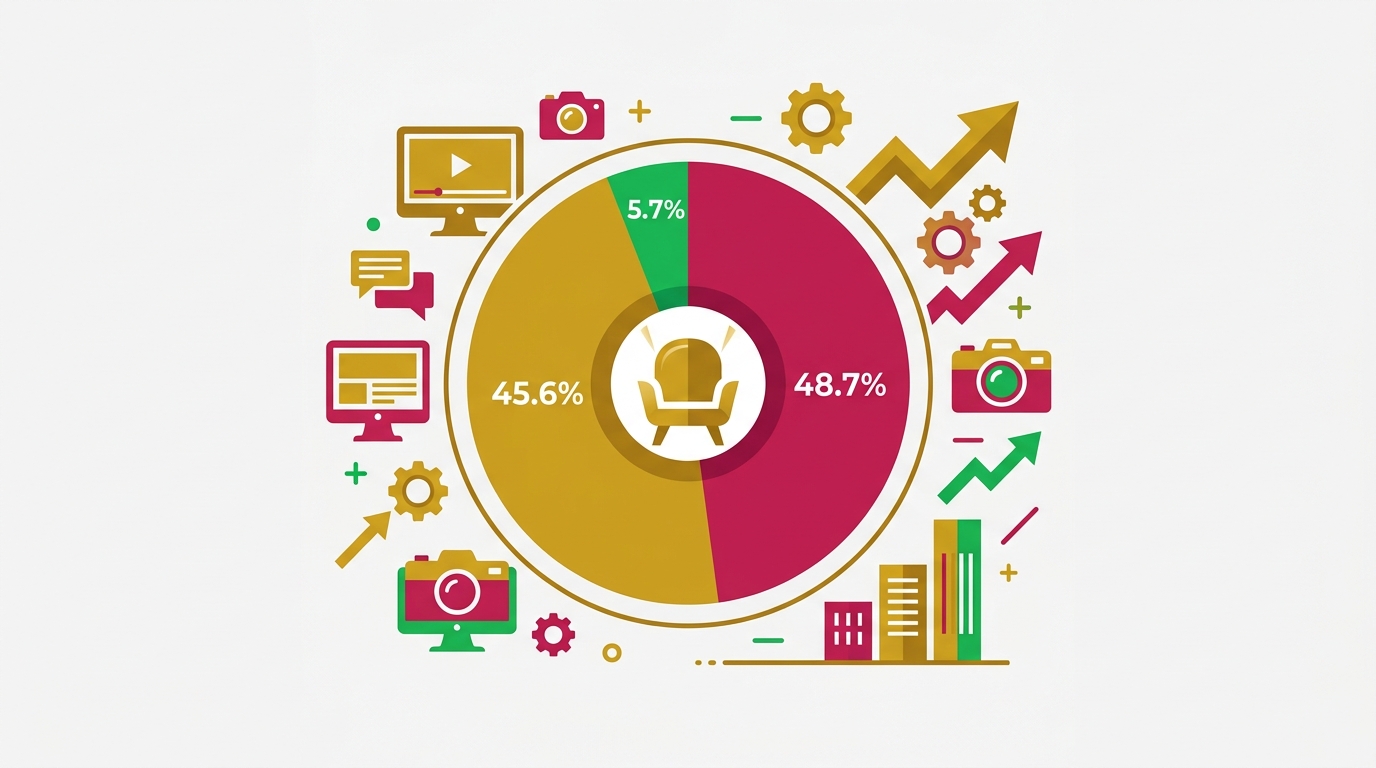
- 48.7% earn under $10K/year (about ¥1.5M)
- 45.6% earn $10K–$100K (about ¥1.5M–¥15M)
- 5.7% earn over $100K
(Reported by Digital Information World)

Half earn under ¥1.5M a year. A $480 billion industry, and half its participants only pull in about ¥120K a month.
This number doesn’t mean “the creator economy is broken.” It’s the opposite. What this number shows you is a map of where the vacancies are.
In the same report, 51.5% of creators achieved year-over-year revenue growth. The market is definitely growing. People who can earn are steadily increasing.
So why doesn’t the 48.7% grow?
Netinfluencer’s 2025 industry review hit the core. It said this: “Creators are expected to succeed without business intelligence.” Business intelligence means customer analysis, revenue design, understanding revenue structure. It’s the basic managerial judgment that any company has.
What platforms provide are surface metrics like view counts and likes. There are barely any creators who can make managerial decisions from that.
This is the true nature of the vacancy.
There are 200 million “people who can make content.” But “people who can design and operate content as a business” are overwhelmingly scarce. Look at where creators invest in their professional development and it’s interesting. Video production at 22.4%, branding at 20% — top of the list. People investing in business design or marketing strategy are the minority.
So here’s what it means. “People who have business knowledge AND can make content” are the most under-supplied human resource in this $480 billion industry.
If you’ve done marketing at a company, or have accounting or HR experience, or hit your numbers in sales — that experience itself becomes the “business map” that 200 million creators are missing.
The Structure That Makes Tech/Finance Creators Earn 2–3x
What comes to mind when you hear “creator”? YouTuber, maybe. Or an Instagrammer.
Actually, the highest-paying creators in the creator economy are the tech and finance creators.
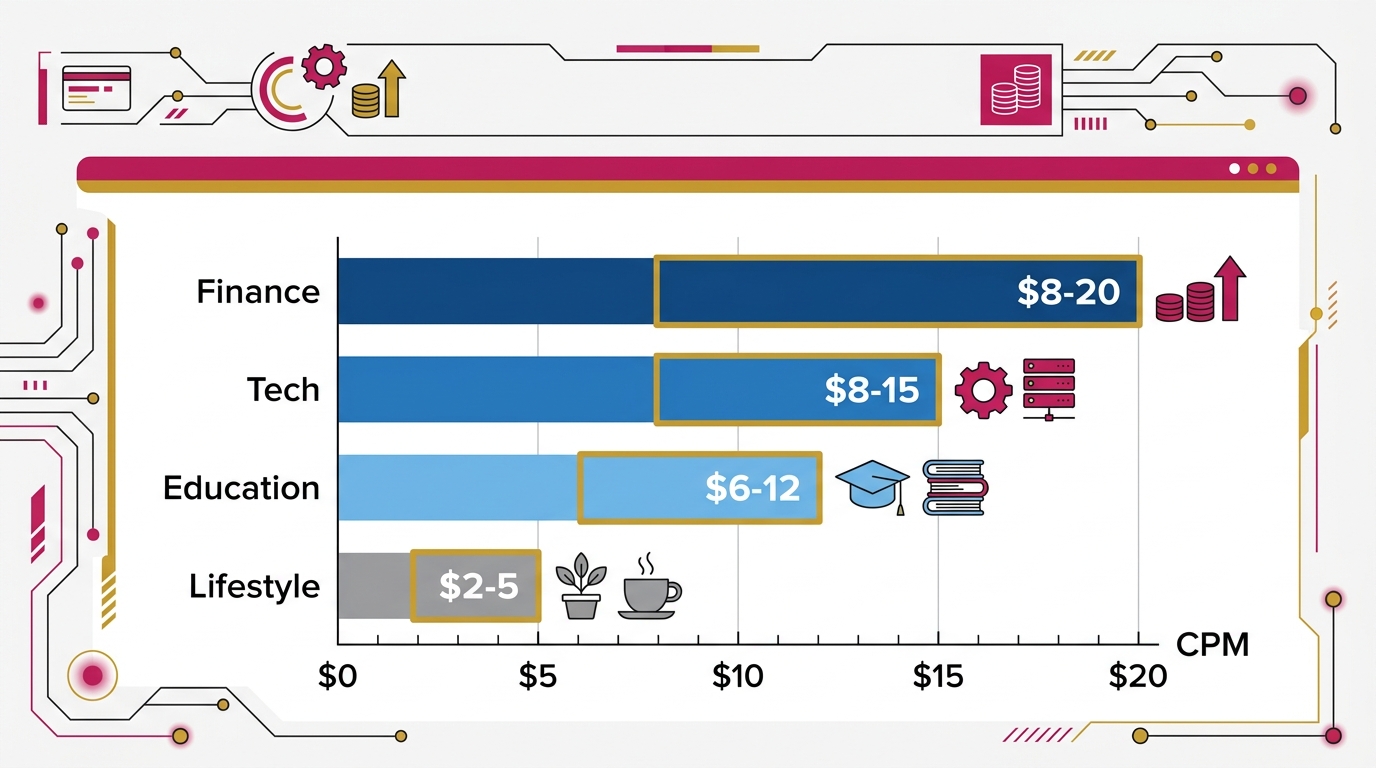
Multiple creator analytics reports consistently show a gap in CPM (cost per 1,000 ad impressions) by genre. As a marketer who’s chased the numbers, this is a familiar structure to me.
| Genre | CPM |
|---|---|
| Finance / Investing / Business | $8–$20 |
| Technology / Education | $8–$15 |
| Lifestyle / Entertainment | $2–$5 |
Finance can have up to a 10x CPM gap. Same platform, same view count, and revenue changes 10x based on genre alone.
Why such a big gap? The reason is simple: B2B (corporate-facing) marketing budgets are overwhelmingly larger than B2C (consumer-facing). Finance audiences are full of investment and business decision-makers. To advertisers, the “value per customer” is high.
Let me put it in real numbers. There’s a case where a finance creator with 150K YouTube subscribers, combining ad revenue + sponsorships + online course sales as three pillars, reaches $12,500–$28,000/month (about ¥1.9M–¥4.2M). Compared to entertainment creators of the same scale, the revenue gap is 2–3x.
There’s one more important piece of data here. The survey result from The Influencer Marketing Factory’s 2026 report. 56.1% of creators answered that “AI will significantly change their work.”
What does AI’s arrival change? It lowers the “production cost” of content. Script drafts, thumbnail creation, editing prep work. AI is starting to take over the work creators used to spend enormous time on.
This is what I want to say.
“I have the expertise but no content production skills, so I can’t publish.” If you’ve been thinking that — now that AI has lowered the production wall, the barrier to entry has shifted to “do you have the expertise or not?”
Lifestyle is a red ocean (an oversaturated market). Meanwhile, tech, finance, and business genres are full of vacancies. And the unit price is 2–3x. People who’ve noticed this structure are already starting to move.
3 Reasons Why “Skilled But Not Yet Publishing” Can Get Ahead Fastest
Let me organize the data so far.
- A $480 billion industry is set to double
- 48.7% of participants earn under ¥1.5M
- Creators with business knowledge are overwhelmingly scarce
- Tech and finance genres pay 2–3x
So why are “skilled non-publishers” at an advantage? There are three reasons.
Reason 1: Expertise is the strongest differentiator that can’t be acquired later
You can learn how to make content. Video editing, writing, design. Tools have evolved, and we’re in an era where AI supports you.
But expertise built up over 10 years in the field — that doesn’t come from YouTube tutorials.
Let me use myself as an example. Before going independent in SNS marketing, I worked in a corporate marketing department. The “how to allocate ad spend” I picked up there became my weapon. The “campaign ROI (return on investment) calculations” too. They all activated the moment I started SNS as a side gig. Even if someone publishes the same content, the words of someone with real-world experience carry weight.
The era of “content skills > expertise” is ending. Now that AI helps with production, the relationship has flipped. We’ve entered the era of “expertise > content skills.”
Reason 2: Business experience becomes premium content as-is
What 48.7% of creators are missing is hands-on business experience. Flip that around, and your “ordinary work experience” is a scarce resource in the creator economy.
The accounting tricks you picked up for tax filings. The proposal-writing techniques you learned in sales. The interview-screening sense you developed in HR. Tons of people are out there thinking “I wish someone would teach me that.”
Goldman Sachs predicts creator population growth of 10–20% annually, right? Flip it — that means “people who want to learn” are expanding at the same pace.
Earlier I mentioned creators’ professional development investments skewing toward video production (22.4%) and branding (20%). What this means is that demand for “content that teaches the substance of business” is unmet.
Just by systematizing and publishing your hands-on experience, there’s a high probability you’ll fit into this unmet demand.
Reason 3: Expertise becomes a “shortcut to trust-building”
The average creator takes about 6.5 months to earn their first $1. DemandSage’s 2026 statistics say so.
But that’s about “entertainment creators.” It’s different when you publish as an expert.
Why? Because expertise itself is proof of trust. “A former banker teaches you how to choose a mortgage” vs. “Mortgage info I researched as a hobby” — the trust level differs before you even click, right?
There’s also data showing 44.9% of creators want “stable long-term brand partnerships.” Companies also prefer long-term contracts with creators who have expertise. Spending money on “someone trustworthy” rather than “someone who goes viral” is the natural business judgment.
”Expert × Content” Starter Design You Can Begin Today
I can hear you saying “Okay, but what do I do first?” Here’s the starter design I share with my consulting clients. All of it.
Step 1: Write out the “things you’ve been asked” list
Paper or spreadsheet, either works. Write down everything “people have asked you” in your past work.
The key is to write “things others have asked you” — not “skills you think are impressive about yourself.” Knowledge that’s obvious to you might be precious to others.
In my case, “How do you do tax filings for side gigs?” was the most common. “How do you find clients?” came up a lot too. All of it became content seeds.
Step 2: Define “who / what / how to solve” in one line
From your inventory, pick the single most-asked theme. Then fill in this one line.
“Solve [problem] for [target] through [your method]”
Example: “Solve ‘30-something office workers wanting to start a side gig but not knowing where to begin’ by walking them through my independence process.”
This one line keeps your content axis from wavering.
Step 3: Design your first 3 pieces of content
Not 100. Just 3 is fine.
- Piece 1: An article directly answering your reader’s “most painful problem”
- Piece 2: A lesson learned from your failure stories
- Piece 3: A step-by-step guide readers can execute immediately
These 3 reveal “are they trustworthy,” “are they useful,” “do I want to follow them.” Quality decides everything.
Step 4: Design monetization FIRST
This is the mistake many creators make. “First grow followers, then monetize” — that order. It’s backwards.
You should design it this way upfront.
| Revenue source | Timing | Preparation |
|---|---|---|
| Consulting | Day one | List on profile |
| Affiliate | Month 1+ | Recommend tools you use |
| Paid articles / newsletter | Month 3+ | After accumulating 10 pieces |
| Online course | Month 6+ | Design after gauging reader response |
The trick is building a structure that doesn’t rely on ad revenue (21.6%) from the start. A combination of merch + affiliate (21.2% combined) and direct charging is good. That way, even if the platform algorithm changes, your revenue foundation doesn’t shake.
Step 5: Use AI as a “production assistant” to the fullest
I mentioned 56.1% of creators acknowledge AI’s impact. Use it as a “weapon,” not a “threat.”
- Have AI generate script outlines, then flesh them out with expertise
- Generate thumbnail drafts with AI to lock in direction
- Hand off research prep to AI, so you can focus on analysis
I have a consulting client who used to work in accounting. She started with “tax filing hacks” as her theme. AI helped her with structure, and she wrote her first article in 2 hours. This is someone who’d said “I’ve never published anything before.”
Now that AI has lowered the production wall, your expertise becomes the biggest barrier to entry. That’s something nobody can copy.
Read Gen’s article alongside this one. You’ll see how to fill the “expert vacancy” from an engineer’s perspective.
Wrap-Up — The Day I First Spoke Up on SNS
A $480 billion creator economy. 200 million participants. 48.7% earn under ¥1.5M. People with expertise are structurally short. Tech and finance unit prices are 2–3x. AI has lowered the production wall.
All the data points the same direction. “The expert vacancy” is open.
I still remember the day I quit my company and made my first SNS post. My hands shook, and I had nothing but anxiety — “who’s going to read this?”
The first DM came. “I was struggling with the same thing. Please teach me how.”
That moment, I understood. What was “ordinary” to me was “what someone wanted to know.”
The knowledge you’ve cultivated at work. That task you do casually every day. The moment a junior colleague asked you something and you thought “wait, you don’t even know that?” All of it becomes content, and all of it becomes a weapon to fill the seats in a $480 billion market.
I think if you’re going to move, now is the time. If Goldman Sachs’ prediction is right, this market will be double in size one year from now. The later you enter, the more those seats fill up.
I’ll move first and have the playbook ready. Next, it’s your turn.

女性だからこそ、AIを使いこなさなきゃって思ってる。仕事も、副業も、推し活も、旅行も、全部やりたい。人生一度きりなのに時間は足りないじゃん?だからAIに任せられることは全部任せる。浮いた時間で本当にやりたいことをやる。それがあたしのスタイル。ここにはあたしが実際にやったことをまとめてるだけ。誰かのためになったらいいなって思って書いてるよ。