'Quit Before AI Takes My Job' Hits Record Highs. I Lined Up 3 Countries' Preemptive Startup Patterns—Only Japan Stood Still
The US saw 1.56 million business applications in a single quarter. China's government is mass-producing 'one-person AI companies' across 8 cities. And Japan? I lined up the preemptive patterns from 3 countries to explain why you need to move now
What you'll learn in this article
- The key point to grasp before reading the full article
- How the issue changes practical decisions after reading
- Which follow-up article is worth opening next
“AI might take my job.”
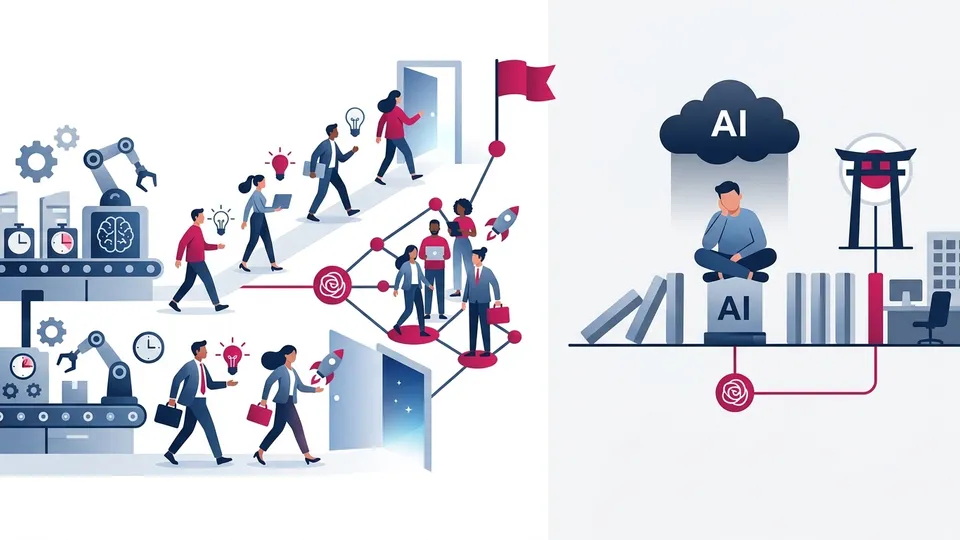
When Americans thought that, they quit. Chinese people are launching companies with their government. Japanese people… read the news and say “scary.”
Honestly, I didn’t think the three countries would move this differently. I went independent doing SNS marketing myself, so I thought I understood what “moving first” meant. But when I lined up the data from each country, “moving first” wasn’t just one shape.
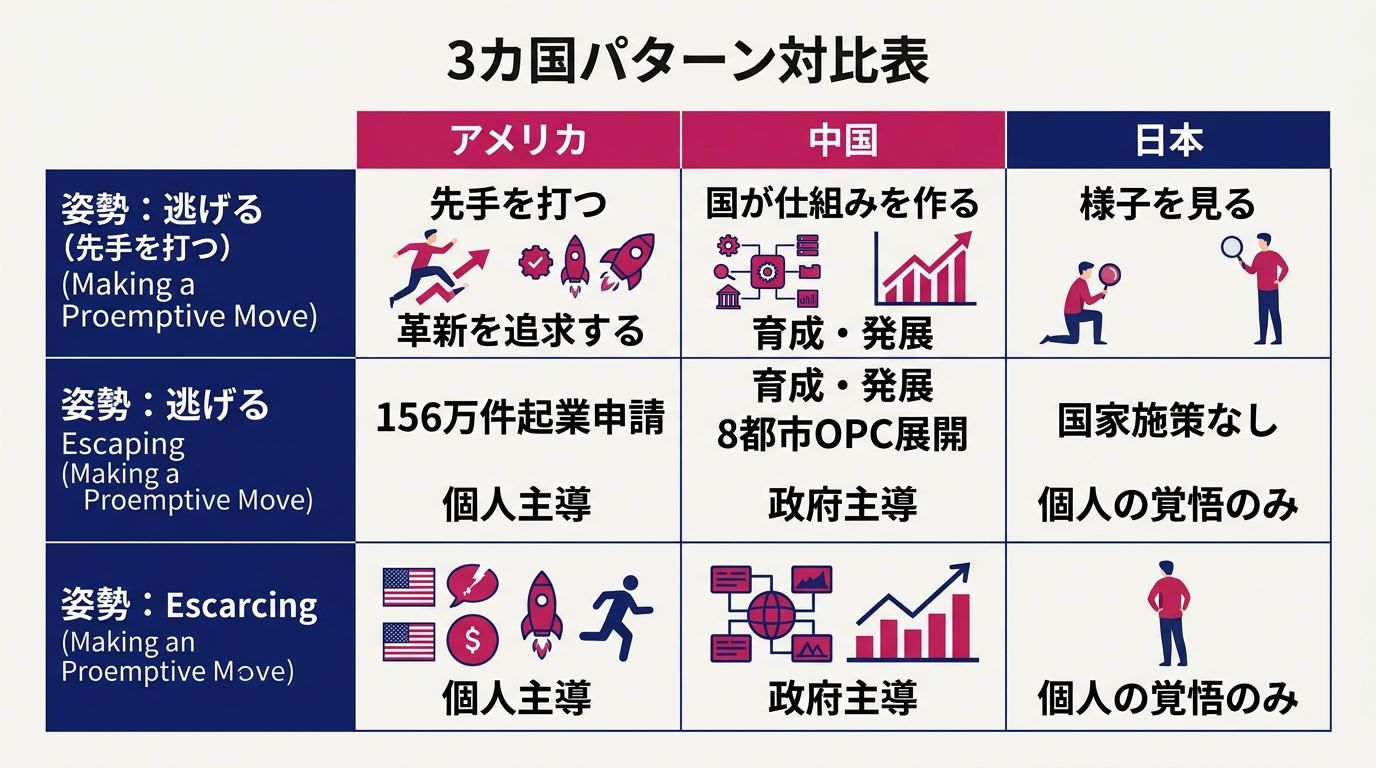
“Escape.” “Cultivate.” “Watch.” Once you know these three patterns, let’s check together: where are you right now?
1.56 Million Americans Who “Quit Before AI Could Take Them”
In the US, 1.56 million business applications were filed in a single quarter. The highest record since 2004.
A CNBC report takes you inside this movement. The numbers came from analyzing US Census Bureau data, concentrated between November 2025 and January 2026.
“AI is coming, so I’ll move first.” The reality of people making this judgment is fascinating.
Take Michelle Yeung. A software engineer earning $250K (about ¥37.5 million) per year. She let it go and opened a matcha café in New York. Her reason? “I wanted to control my own life.”
Travis Di Lombardi-Spicer is a 30-year-old audio producer. He’s invested $40K (about ¥6 million) building a new service called Spotbookr.
What these two have in common: they didn’t move after getting fired. They chose entrepreneurship on their own while they still had jobs.
What caught my attention was the “why now?” part.
The same CNBC article cites a Resume Now survey. Four out of ten workers answered this: “AI is replacing or devaluing my work.”
29% said “AI could handle more than half of my daily tasks.”
In other words, before AI has fully taken their seat, they’ve already noticed “this is dangerous if I stay put.” Major companies like Amazon and Salesforce are accelerating AI adoption. That reality is pushing employees from behind.
What I felt looking at these numbers: “Americans aren’t more scared—they get scared earlier.” The speed at which fear converts to action is just different. Japanese people think “scary” and then gather information. Americans think “scary” and then move. That gap shows up as 1.56 million startup applications.
HBR’s analysis goes even deeper. AI-related layoffs in 2025 totaled about 55,000. But the reason for cuts wasn’t AI’s “actual performance”—it was AI’s “potential” (future possibility).
Nothing’s actually been replaced yet, but companies are cutting headcount preemptively. And a Fortune survey found that CFOs (Chief Financial Officers) admit “AI-related layoffs this year will be 9x last year’s.”
If companies are moving at this speed, individuals have no choice but to move first too.
A Zoom survey also reports that new businesses are increasing in 92% of economies worldwide. An era when 19% of American adults call themselves “entrepreneurs.” Also a record high.
It’s not “escaping.” It’s “moving first.”
A nose that judges staying at a company as the risk. The speed to convert that judgment into action. American entrepreneurs have both. Even I think “they move too fast.” But the speed produces results—that’s the fact.
This is America’s first pattern.
China: “The State Moved First”
China’s approach is the polar opposite of America’s. Before individuals moved, the government built the system.
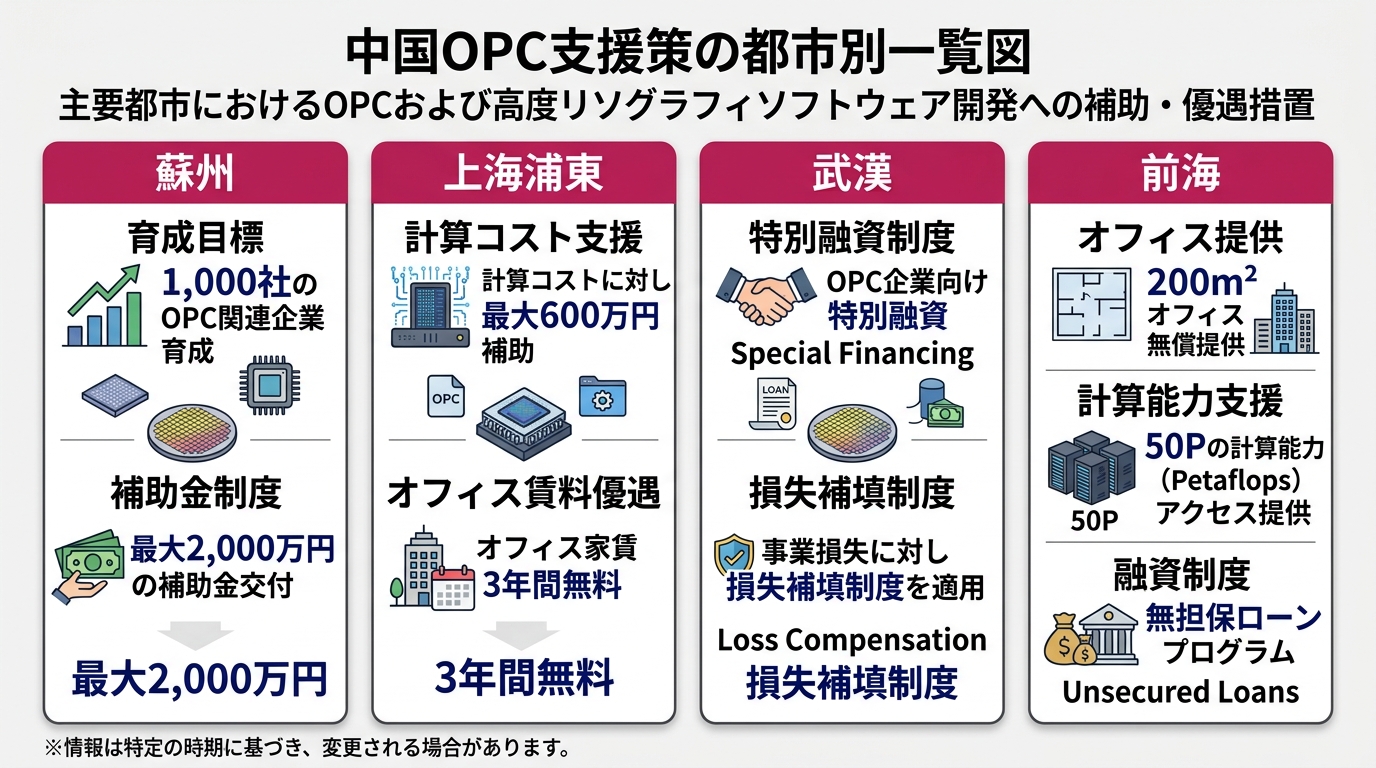
According to Rest of World, more than 8 cities in China are deploying OPC support programs. OPC stands for One-Person Company—an AI company run by a single person. Let me line up the representative measures.
Suzhou. The first city to systematize the OPC startup model nationwide. The plan is to establish 30 OPC communities by 2028, with a goal of nurturing 1,000 companies. Outstanding projects can receive subsidies of up to ¥1 million yuan (about ¥20 million).
Shanghai’s Pudong District. Subsidizes cloud computing costs for AI development up to ¥300,000 yuan (about ¥6 million). The “Zero Gravity” community offers rent-free space for up to 3 years. You can use it for just ¥90 yuan (about ¥1,800) a month.
Wuhan. A city that built special financing for OPCs. The government even backstops default (loan repayment failure) losses.
Qianhai. Launched the “OPC Mavericks Program.” Up to 200m² of office space free for 2 years. Up to 50P of annual computing capacity and unsecured loans included.
According to JETRO, the Chinese government has set a goal of growing the AI industry to ¥10 trillion yuan (about ¥200 trillion) by 2030. OPCs are part of that strategy.
Dario Amodei. CEO of Anthropic. I covered his quote “an era is coming when one person can build a $1B company” in my previous article. China is starting to implement that vision as national strategy.
The point: it’s not “entrepreneurs moved first.” The government moved first, and entrepreneurs rode the wave.
The design has the state absorbing individual risk. Rent, computing costs, loan guarantees. The scariest part of starting a business—“what if I run out of money?”—the government is carrying it for you.
When I saw Suzhou’s ¥1 million yuan subsidy, honestly, I was jealous. When I went independent, every yen came out of my pocket. But alongside the envy, I also thought: “Can government-dependent entrepreneurs stand on their own feet?” Whether they can keep running after the subsidies end—that’s a separate question.
This is China’s second pattern. The “state moves first, individuals ride the wave” model.
Japan Is Stuck in “Spectator Mode”
Let me be honest. Japan has neither America’s “preemptive startup boom” nor China’s “national OPC program.”
As of April 2026, government programs equivalent to OPCs: zero. Side-job liberalization gets a news mention a few times a year as “more companies allow it.” Record-breaking startup applications? Not even a topic.
Startup support programs do exist, but nothing specifically designed for “AI × solo entrepreneurship” like OPCs. METI’s J-Startup targets high-growth startups. The Small and Medium Enterprise Agency’s subsidies mainly target existing businesses. I can’t find any measure aimed squarely at people “starting from zero, alone, using AI.”
This isn’t criticism. It’s just fact.
Actually, people are moving at the individual level. Even just in my circle, there are people who started broadcasting on SNS while still being company employees. Some who’ve crossed ¥100K/month in side consulting. People stacking real results in business improvement using AI tools.
But what these people share: they’re “doing it all themselves.” No startup boom wave like America. No subsidies or free computing resources like China.
If you move, your only allies are your own judgment and resolve. That’s the reality in Japan.
I had the same experience when I went independent. I proposed “let me do SNS marketing” at my company and got nowhere. So I had to do it myself. I started with a side gig, and when my income caught up, I quit. Nobody said “sure, go for it.”
That’s why I think: people who can move first in Japan are even more impressive than Americans or Chinese. No system, no subsidies, no community. They’re moving on their will alone.
In America, individuals run. In China, the state makes them run. In Japan… if you decide to run, you have to start by lacing your own shoes.
Let me say this bluntly: the mindset of “waiting for the government to do something” is outdated. The 1.56 million Americans moved without relying on the state. China’s OPC participants who jumped in first were the ones already experimenting before support programs existed.
In the end, the people who move first take the sweetest fruit. That’s true in every country.
The Dividing Line Between Movers and Laggards
Lining up the three countries, what became clear is that people who move first share just one condition.
It’s not “I moved because preparation was perfect.” It’s whether they “started small experiments first.” Just that.
The 1.56 million Americans. The OPC participants in China’s 8 cities. Neither group went “all in” out of nowhere. They tested through side gigs, watched the numbers, and only stepped forward when they thought “I can do this.”
Michelle could let go of her ¥37.5 million salary because she had time to nurture the seed of her business. Nobody just spontaneously thinks “let’s open a matcha café.” China’s OPC participants too—mostly people who’d already been touching AI tools before applying to the program.
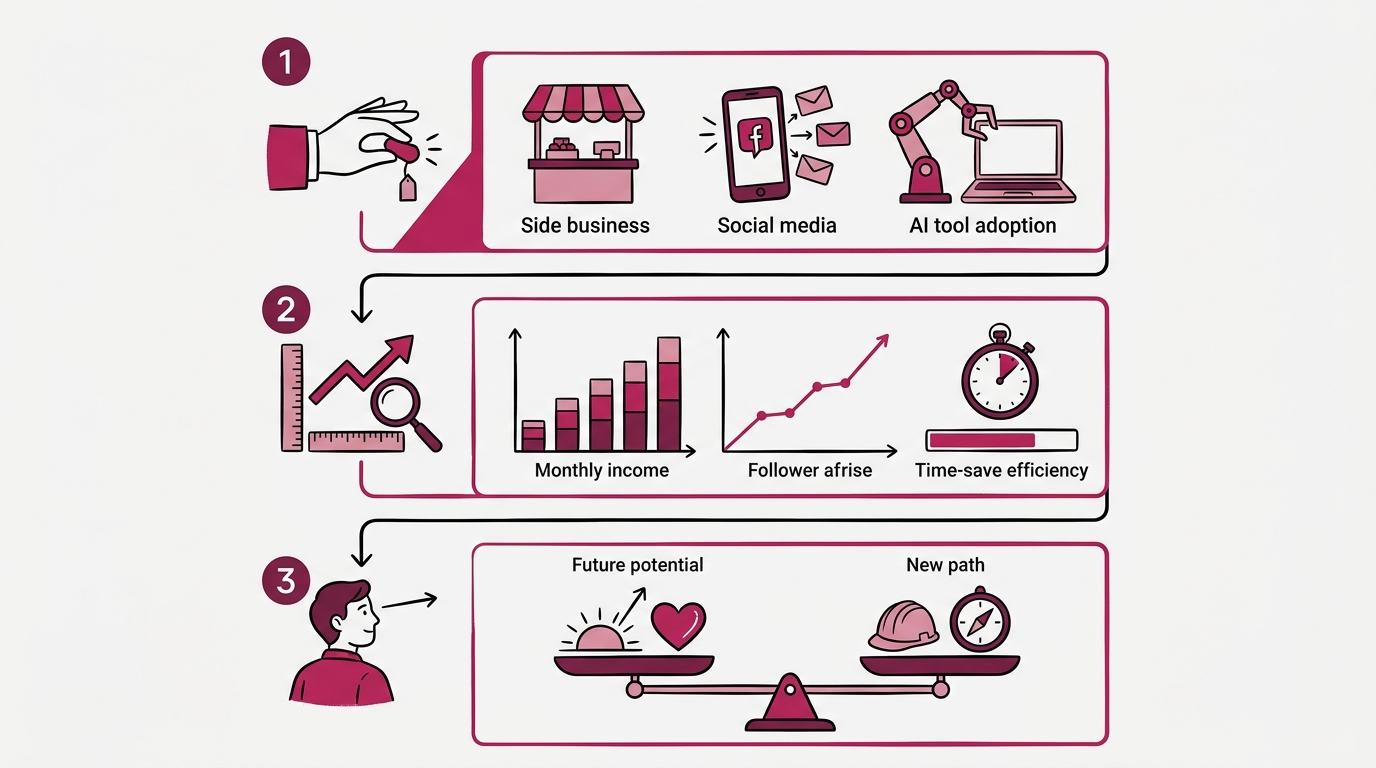
The Zoom survey backs up this trend. A survey of 29.8 million solopreneurs (people running businesses alone). 91% recouped their AI investment ROI (return on investment) within a year.
But this isn’t about people who invested big from the start. It’s the numbers for people who started with AI tools costing a few thousand yen a month, confirmed results, and scaled up. 64% answered “I couldn’t have continued my business without AI.”
I was the same way. Before going independent in SNS marketing, I spent a year on it as a side gig. I started at ¥30K/month, and six months later I was over ¥150K. Watching those numbers, I felt convinced “I can do this.”
If I hadn’t done the side gig, I think I’d still be at the company. Watching my boss’s face, holding back what I wanted to do. Convincing myself daily that “quitting is scary.”
Being “able to move first” wasn’t about courage. The small experiment gave me evidence that “I can do this.” When you have evidence, the decision stops being scary.
“Moving first” isn’t about bold decisions. It’s about small experiments piling up until one day there’s a flip: “the side gig is more reliable than the day job.” Whether you can move without hesitation in that moment is everything.
You can start just fine with a monthly $75 (about ¥11,000) AI stack design. The initial investment can be shockingly small.
ChatGPT’s paid plan is $20/month. Canva is $13/month. Add 2-3 AI tools fitted to your purpose. About ¥10,000/month total. For the price of three lunches, you can take your first step into “preemptive entrepreneurship.”
The “first I need to raise big capital…” mindset is itself outdated.
Which Type Are You? Find Your Position in 4 Patterns
After reading this far, I want you to think about where you are.
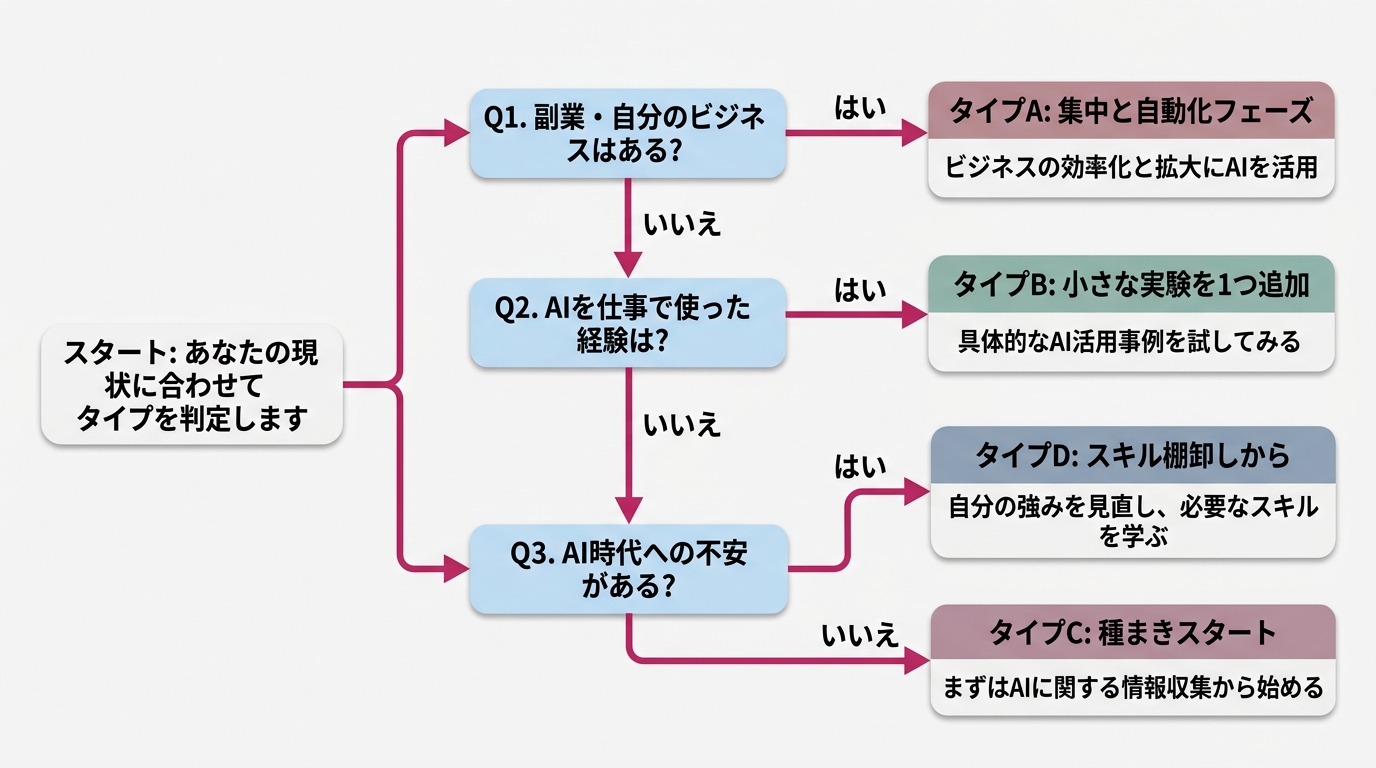
“Moving first” sounds like one thing, but the action you should take varies by your situation. I’ve split it into four patterns—find the one closest to you.
Type A: Already in motion. People who already have a side gig or their own business. The next phase is “what to let go of, what to focus on more.” Identify tasks you can automate with AI, and use the freed time to grow your core business. Specifically, try handing accounting, scheduling, and SNS post drafts to AI.
Type B: Want to move but don’t know where to start. Probably the most common type. The answer is simple: “use AI for one thing in your current job.” Auto-summarizing meeting minutes, generating email drafts—anything works. Creating one success experience becomes the starting point for everything. Once you feel “AI is amazing,” you’ll see what else you can use it for.
Type C: Stable day job, no urgency. No need to rush, but at least plant seeds. Broadcast on SNS once a week, show up at industry meetups, try AI’s free plans. Even without going independent right now, increasing your options is itself “moving first.” China’s OPC applicants, most of them started moving while still employed.
Type D: Anxious about AI but not thinking about entrepreneurship. Totally fine. Entrepreneurship isn’t the only correct answer. But please at least do a skill inventory. Grab a sheet of paper. On the left, write “skills hard to replace with AI.” On the right, write “skills enhanceable with AI.” Ten minutes does it, and you’ll have more material for future decisions.
What’s common across all types: “decide the smallest possible step you can take today.”
- Type A → Pick one task to delegate to AI
- Type B → Sign up for one AI tool
- Type C → Make an SNS account and post once
- Type D → Write your skills out on paper
Just that much is enough. “Preemptive entrepreneurship” sounds grand, but the entry point is always small.
Summary
Let me organize the “preemptive startup patterns” of the three countries.
America is a country where “individuals judge and move first.” 1.56 million startup applications per quarter and 19% of adults self-identifying as entrepreneurs are the proof. The stance of changing the game yourself before AI takes your seat has spread across society.
China is a country where “the government builds the system and puts individuals on it.” Subsidies, financing, and computing resources deployed simultaneously across 8+ cities. The national goal of a ¥10 trillion yuan (about ¥200 trillion) AI industry is accelerating OPCs.
Japan remains in “spectator mode.” There’s no national support system yet. If you move, your only ally is personal resolve.
But I’m not pessimistic about that.
People who can move without a system are ultimately the strongest. The ability to run without anyone’s permission lasts longer than any subsidy.
When I went independent, nobody pushed me forward. My income dropped by half for the first three months, and I lay awake every night thinking “am I really going to be okay?” But I moved because I believed “I can do this.” Five years later, I can say from my heart that the judgment was right.
Which of the three countries’ patterns is correct? No clean answer—cultures and systems differ, naturally.
But lining up these three, what struck me strongest: “the timing to move first is earlier than you think.” America’s 1.56 million moved before AI had taken their seats. China’s entrepreneurs were already touching AI before OPC support programs were announced. While you’re thinking “let me watch a bit longer,” the world has moved to the next phase.
The one thing certain: “people who only watch” end up only watching.
America’s 1.56 million also started with “let me give it a shot.” People who jumped on China’s support programs—if they hadn’t touched AI before, they couldn’t have even applied.
Small is fine. Just move on one thing this week. Signing up for an AI tool’s free plan is enough. One post on SNS is enough. That one step turns you, six months from now, into “someone who moved first.”
Source Map (Mandated by Kamiza Decision)
| Source | URL | Published | Citation |
|---|---|---|---|
| CNBC | Article | 2026-03-27 | 1.56M quarterly startup applications / Michelle & Travis cases ⚠️403 (bot protection) |
| Resume Now (via CNBC) | Cited in CNBC article | 2026-03 | 4 in 10 workers “AI is replacing my work” / 29% “AI can handle more than half my work” |
| HBR | Article | 2026-01 | ~55,000 AI-related job cuts / layoffs driven by AI’s “potential” |
| Fortune | Article | 2026-03-24 | CFOs: “AI-related layoffs this year will be 9x last year’s” ⚠️403 (bot protection) |
| Zoom | Article | 2026 | New businesses up in 92% of economies / 91% recoup AI ROI within 1 year |
| Rest of World | Article | 2026 | Details of OPC support in 8+ Chinese cities |
| JETRO | Article | 2026-03 | China AI industry ¥10 trillion yuan goal by 2030 |
| Alvinology | Article | 2026-03-20 | Qianhai OPC Mavericks Program details (office/computing/loans) |
※ URL liveness check: HBR/Zoom/RestOfWorld/JETRO/Alvinology → curl 200 ✅ | CNBC/Fortune → curl 403 (bot protection, page existence confirmed) ⚠️

女性だからこそ、AIを使いこなさなきゃって思ってる。仕事も、副業も、推し活も、旅行も、全部やりたい。人生一度きりなのに時間は足りないじゃん?だからAIに任せられることは全部任せる。浮いた時間で本当にやりたいことをやる。それがあたしのスタイル。ここにはあたしが実際にやったことをまとめてるだけ。誰かのためになったらいいなって思って書いてるよ。