Going Solo with AI Scale. The Three Conditions Behind $1B One-Person Businesses
NYT, Fortune, and Zoom released three separate datasets at the same time, all pointing to the same insight. The ceiling on solo businesses has changed. Use this self-diagnostic framework to figure out which phase you're in right now.
What you'll learn in this article
- The key point to grasp before reading the full article
- How the issue changes practical decisions after reading
- Which follow-up article is worth opening next
[[IMG:hero]]
Three reports dropped from April through May, each covering something different.
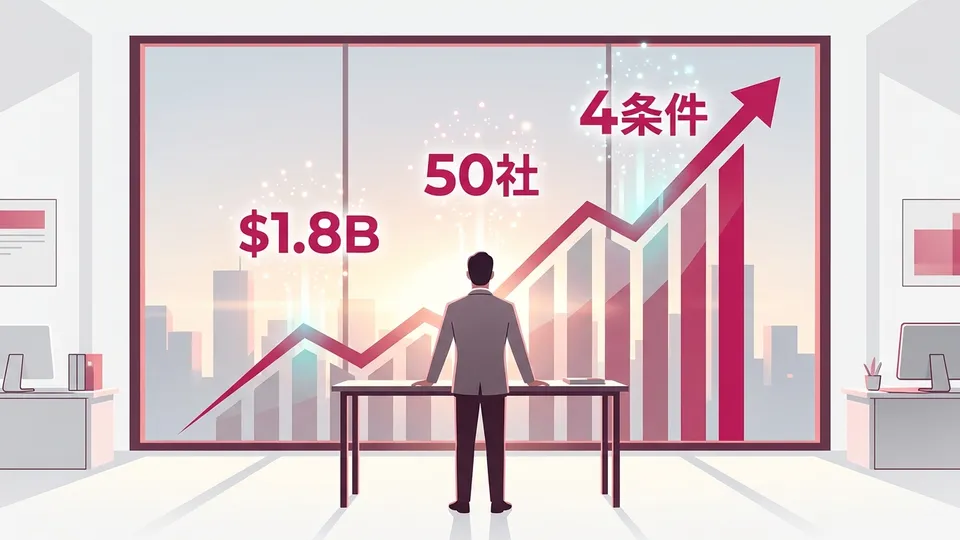
NYT reported on two brothers who built a $1.8B company with AI. Inc. shared Dario Amodei’s prediction that “a $1B solopreneur will emerge in 2026.” Zoom officially recognized 50 solopreneurs who scaled rapidly with AI.
Three pieces, three outlets, three completely different angles. But read them together, and they all point to the same place.
“There’s no ceiling on solo businesses. If there’s a ceiling, it’s a design problem.”
I’m going to compress these three data points into one framework and hand it to you. Use it as a map to figure out which phase you’re in right now.
The Data That Shattered the “Solo Business Has a Ceiling” Assumption
“That business model doesn’t scale, does it?”
I’ve lost count of how many times I’ve heard that since going independent. Scale — growing the size of your business — requires hiring people. You can’t grow without a team. Going solo means accepting a “comfortable limit” — that’s what consultants, investors, and even friends say.
When I first went independent, those words got to me. “Solo SNS marketing has a ceiling” — that voice still echoes. But what I’ve learned from staying independent is that the underlying assumption is being updated.
First, the data. According to Zoom’s official press release (2026-05-04), there are approximately 29.8 million solopreneurs in the United States. Of those, 82% have no employees.
Traditionally, you’d read “82% stuck at small scale.” But now there’s a different reading available: “82% are operating lean, and design-wise, they’re entering a structure where scaling is becoming possible.”
Anthropic CEO Dario Amodei keeps saying it: “There’s a 70–80% chance a $1B solopreneur emerges in 2026” (Inc., Ben Sherry).
This isn’t something to skim past as a prediction. It’s better read as a structural shift: “The era when a single person can handle $1B-scale business operations with AI has arrived.” That’s how I’m taking it.
Fortune reported in the same period that the solopreneur population has grown to around 33 million (2026-05-03). It’s not just a numbers game — the way money is made has changed. That’s my read.
The assumption that “solo can’t scale” started cracking, and three data points appeared at the same time as evidence. Three completely separate articles. But they pointed to the same place.
So what specifically changed, and how? I’ll break down NYT, Inc., and Zoom in order.

What the NYT “$1.8B Company” Revealed About the Variable Called “Design”
I’m re-reading the Medvi case reported by NYT on April 2, 2026 through the lens of design theory (NYT paid article; existence confirmed via Techmeme).
(I addressed this case in my May 13 article from the angle of the definitional problem of “it wasn’t really solo.” Today I’m drilling into it from a different angle.)
Medvi was built by Matthew Gallagher and his brother Elliot. They launched an online GLP-1 (a type of weight-loss medication) prescription service with $20,000. Their 2026 revenue pace is $1.8B (approximately $1.8 billion), with a total headcount of two brothers.
I don’t want to just file this away as “an amazing case.” There’s a reason: if you break down the design behind why two people could get this far, the replicable parts become visible.
Here’s what Matthew himself told NYT: AI handled coding, copywriting, image generation, and parts of customer support. What humans handled: “strategic judgment” and “relationship building with customers” — just two things.
From the start, he designed a clear separation between “work AI handles” and “work humans handle.” The solution wasn’t to hire more people; it was to fix the division of labor design first. I’m calling this “AI division design.”
Three characteristics of AI division design:
1. List AI-substitutable tasks upfront. Coding, copy, images, and templated support all go on this list. Design these as “tasks humans won’t handle” from day one.
2. Narrow human tasks down to “parts where value drops if handed to AI.” Trust-building with customers and whole-picture strategic judgment. That’s it.
3. Update the AI-human boundary regularly. As AI precision improves, the human-only zone can be narrowed further. Design isn’t static — it evolves.
An important caveat: Medvi received a warning letter from the FDA (Food and Drug Administration) (Drug Discovery Trends). Issues were flagged around AI-generated doctor profiles and advertising misrepresentation. NYT has since added corrections to the article. I’m not citing Medvi to endorse the entire business model. I’m here to learn from the structure called “AI division design.” The ethical issues are ethical issues — please keep them separate.
Reading Across Three Data Points — Four Conditions for Reaching $1B
I read deeply across the NYT Medvi coverage, the Dario Amodei prediction in Inc., and Zoom’s recognition criteria. Four conditions surfaced as common threads. These are the four points I thought were replicable.
Condition 1: Choose a niche with significant pain
Medvi’s GLP-1 prescriptions are exactly this. Large numbers of people who need the medication can’t easily access prescriptions. Markets with significant pain tend to have low price sensitivity and structurally higher margins.
For solopreneurs aiming for scale, “broadly targeting a large market” is less realistic than “precisely targeting a market with deep pain.” Better to own the center of a small pie than to fight for the edge of a large one. With AI, even a small team can keep drilling into a deep market.
Condition 2: Put AI at the center of operations
“Using AI” and “AI at the operational core” are completely different. The difference is whether AI is a tool or a functional contributor.
In Medvi’s case, AI functioned as a substitute coder and substitute copywriter. Thirty hours of weekly work ran on API costs alone. Once that structure is in place, operations run on infrastructure costs, not payroll.
Condition 3: Stay asset-light
No inventory, no real estate, no manufacturing equipment. Software and services only. The cost of scaling shifts from headcount to API usage and design costs.
The key is protecting a structure where “profit margins don’t fall as you scale.” Physical assets add fixed costs every time you scale. Staying asset-light means scale comes along with expanded AI utilization.
Condition 4: The founder has deep industry experience
Matthew has healthcare industry experience. AI can’t substitute for industry “tacit knowledge.” Deep contextual understanding is the starting point for using AI correctly.
Flip it around: even with zero AI skills, industry experience is enough to enter. “AI × your own industry experience” is the most powerful combination for solopreneurs today. I was able to go independent in SNS marketing because I had a marketer’s background. I learned the AI tools after.
Organizing these four conditions gives you a solo business design framework: ① market with significant pain, ② AI at the operational core, ③ asset-light structure, ④ your own industry experience. When all four align, replicability strengthens.
Zoom’s “50 Companies Recognized” Proved That Design Quality Transcends Industry
Zoom’s official announcement (2026-05-04) introduced the “Solopreneur 50” program: 50 officially recognized from 3,000+ applicants.
The breakdown of the 50 shows them spread across 12 industries, 48 states, and 400+ cities. Consultants were selected alongside artists and educators. The industry skew was smaller than I expected.
From this, something becomes clear: “The gap between design quality matters more than the gap between industries” — a law that emerged across the 50 companies.
What stands out in the selection is the “Performance” evaluation axis. The focus wasn’t simply revenue or growth rate, but “whether the business has measurable momentum.” Can you run an experiment, measure the result, and improve? That was the question.
Another axis in Zoom’s criteria: “Can you keep growing by design?” Does the business have a structure that can grow without pouring in massive resources? This maps directly onto conditions ② and ③.
62% of the 50 were already profitable, and the median founding year was 2022 (Zoom official). Companies that had completed “a design capable of generating profit” in 3–4 years were the recognition targets. Speed and design together are the prerequisites for scale.
The $150K grant received after recognition is also worth noting. It’s expected to be used on infrastructure and tool development, not hiring. “Strengthen the design, not the headcount” — Zoom’s own choices reflect this direction.
Industry turned out not to matter. The thread through all of them was design quality and the cycle of measurement and improvement. That’s the conclusion.

Where All Three Data Points Converge — “Phase Design”
NYT’s Medvi case, Inc.’s Dario Amodei prediction, Zoom’s recognition program. Lay the three data points side by side, and one structure emerges.
“Scale isn’t something you design for upfront. It’s what comes as a result of accurately understanding which phase you’re in and stacking up the right design for that phase.”
I’m calling this “phase design.”
Medvi wasn’t aiming for $1.8B from day one. They built a design to solve “people who need GLP-1 but can’t access prescriptions” using AI. $1.8B was where they landed.
The Zoom Solopreneur 50 is the same. They weren’t designed to win recognition. They ran the “test, measure, expand” cycle, and recognition is what they got.
Phase design works simply in three stages.
① Exploration phase (annual revenue up to ¥3M / ~$20K): Use AI to test whether something creates value at low cost. Failure is cheap in this period — run as many small experiments as possible. This is too early to be thinking about scale.
② Proof phase (annual revenue ¥3M–10M / ~$20K–$65K): You’ve found something with replicability. One monetization mechanism is running stably. What to do in this stage: polish one mechanism.
③ Scale phase (annual revenue ¥10M+ / ~$65K+): You’re at the stage where you can add external resources to a stable mechanism. Deepening AI integration or partnering externally become real options.
Where most solo entrepreneurs stumble is trying to skip the proof phase and jump straight to scale. Caving to outside pressure of “you can’t scale without hiring,” they bring in headcount before the mechanism is solid. The cost structure gets heavy, movement becomes hard — I’ve watched that happen to people around me more times than I can count.
The flip side: people who stay in exploration phase too long and can’t move to proof. Always experimenting with AI, always feeling “not ready yet,” stuck. In both cases, the root cause is the same: not accurately knowing which phase you’re in.

Self-Diagnostic: Which Phase Are You In Right Now?
Answer these three questions honestly.
Question 1: Are you using AI for business work more than five hours a week?
“No” means you’re at the pre-exploration phase. Building the habit of using AI comes first. Whatever tool — ChatGPT, Claude, anything. Try using it five hours a week. What you see will be completely different.
This week’s one move: replace one piece of your work with AI and try it. Scale comes later; build the habit first.
“Yes” means you’re in the exploration phase. Move to the next question.
Question 2: Is your monthly revenue consistently over ¥1M (~$6.5K)?
“No” likely means you haven’t entered the proof phase. ¥1M monthly is a benchmark for “one mechanism is running.” This is too early to think about scale. Focus on identifying “what’s actually working.”
This week’s one move: find the single channel that drove the most revenue over the past three months.
“Yes” means you’re in the proof phase. Move to the next question.
Question 3: Do you have any mechanism that generates revenue automatically — beyond project-based work?
“No” means you’re in the second half of the proof phase. What to do now: design which parts can be automated. Three AI automation candidates: content distribution, inquiry responses, and nurturing (building ongoing relationships with potential customers). This week’s one move: build one mechanism that automates 30% of your inquiries with AI.
“Yes” means you’re ready to move into the scale phase. This is the first moment when “external partnership” or “team design” become actual options. Put AI integration before hiring as the first candidate. This week’s one move: try one new revenue channel with AI integration.
The right AI tools shift as your phase shifts. Anthropic’s 15 AI agent use cases for small businesses, which the company published for the public, are useful for making phase-appropriate choices (15 AI Agent Use Cases for Small Businesses).

Conclusion
“The ceiling on solo businesses” was a product of assumptions.
The NYT’s Medvi case proved that two people and $20K can build a $1.8B company. Reading across the three data points, the replication conditions distill into four. Zoom Solopreneur 50 backed that structure with 50 real-world examples across 12 industries.
What all three data points are saying is one thing.
“Scale isn’t determined by funding and headcount. It’s determined by accurate phase awareness and the right design stacked up for each phase.”
I’m writing this because I have a basis for it. When I went independent in SNS marketing, I wasn’t thinking “let’s scale” from day one. I stacked design choices to solve the problems in front of me, one at a time with AI. Because I stayed honest about which phase I was in, I got to where I am now.
When solopreneurs and people who went independent from a side hustle accurately understand their phase and use AI effectively, the “scale wall” becomes a design problem. The future the three data points showed isn’t a talent or effort problem. It’s a design and action problem. Whatever phase you’re in, there’s a choice available today that you’ll be glad you made.
There’s only one thing you can start today: honestly answer “which phase am I in right now?”
When the phase changes, the design changes. And when the design changes — scale follows.
“Results come to those who actually do it.” That line lands even harder once you know your phase.

女性だからこそ、AIを使いこなさなきゃって思ってる。仕事も、副業も、推し活も、旅行も、全部やりたい。人生一度きりなのに時間は足りないじゃん?だからAIに任せられることは全部任せる。浮いた時間で本当にやりたいことをやる。それがあたしのスタイル。ここにはあたしが実際にやったことをまとめてるだけ。誰かのためになったらいいなって思って書いてるよ。